
 Again this year, the VSO will collect food items at its concert in Burlington as part of the national “Orchestras Feeding America” project. Audience members and the public may bring a non-perishable food item to the Flynn Theater lobby on March 10 or the Paramount Theater lobby on March 11. All food collected will be donated directly to the Vermont Foodbank and donors will receive “Beethoven Bucks,” good for discounts on future VSO ticket purchases. Suggested food items include boxed dry goods, canned goods and soups, cereal, pasta, rice, and peanut butter…please, no glass, perishables or clothing.
“Orchestras Feeding America” is a national food drive organized by the League of American Orchestras, representing America’s professional, volunteer, and youth orchestras. This is the fourth year of the program in which 250 orchestras in 50 states have so far collected over 350,000 pounds of food. The food drive demonstrates the collective power of America’s orchestras in undertaking a project designed to help feed the hungry in their local communities. Food collected by the VSO will be distributed to Vermont Foodbank partners around the state, to help ensure that all Vermonters have enough to eat.
Keep reading!
Friday, March 2, 2012
Bring your non-perishable food items to the Flynn or the Paramount!

Friday, February 24, 2012
Program notes: March 9-11
Second only to “Peter and the Wolf” in popularity, Prokofiev’s Classical Symphony is one part neo-classicism (harkening back to an 18th century idiom), and one part innovation, stirred by a belief that music should nourish with hope and beauty. The result is delicious! Our soloist for Richard Strauss’s first horn concerto is the amazing Jennifer Montone, principal horn with the Philadelphia Orchestra. Strauss’ abiding love for the heroic French horn, and his indebtedness to the style of Schumann and Mendelssohn, are evident in this remarkably mature early work. The concert concludes with Beethoven’s paean to heroism, his Third Symphony. Although the “Eroica” includes the most famous funeral march in the literature, death does not have the last word in this epic, immortal symphony. Keep reading for the complete concert schedule and program notes.
Friday, March 9, 7:30 p.m.
Bellows Falls Opera House, Bellows Falls
Saturday, March 10, 8 p.m.
Flynn Center, Burlington
Part of the Masterworks Series
Sunday, March 11, 4 p.m.
Paramount Theatre, Rutland
Part of the Sunday Matinee Series
Jaime Laredo, conductor
Jennifer Montone, horn
PROKOFIEV Classical Symphony
STRAUSS Horn Concerto No. 1
BEETHOVEN Symphony No. 3, "Eroica"
Classical Symphony, Op. 25
Sergei Prokofiev (1891-1953) “It is the duty of the composer to serve his fellow men, to beautify human life and point the way to radiant future. Such is the immutable code of art as I see it.” –SP
Prokofiev’s first music teacher was his mother, and it is to her influence and the Beethoven sonatas he heard her play in his infancy that he attributed his penchant for neo-classicism, or the imitation of the classical style of the eighteenth century. Innovation was the other principal feature of his work in which he took pride, and it was a gibe at his “elementary harmony” from his teacher Taneieff which Prokofiev claimed was the foundation of his need for an individual idiom. This recipe of one part neo-classicism and one part innovation, stirred by a belief that music should endow mankind with a sense of hope and beauty, resulted in Prokofiev’s delicious Classical Symphony.
Growing up in a musical home, Prokofiev began composing early and was always at the piano. While a student at the St. Petersburg Conservatory, he composed well over a hundred works, which he considered student work, not suitable for publication. By 1914, he had established a style with elements of humor and lyricism, popularized by short piano pieces. After a couple of important works for orchestra, Prokofiev decided to push himself away from the piano as a compositional tool.
Until this time I had always composed at the piano, but I noticed that the thematic material composed away from the piano was often better. I had been toying with the idea of writing a whole symphony without the piano. I believed that the orchestra would sound more natural. That is how the project for a symphony in the Haydn style had come into being. Had Haydn lived in our day, he would have retained his own style while accepting something of the new at the same time.
The Classical Symphony is the most popular of Prokofiev’s works, and in it are his signature techniques of sudden shifts of tonality, deceptive cadences, and leaping melodic intervals, all in the service of mischief in classical dress. It’s a short dress, too, less than 15 minutes.I. Allegro – This is an utterly polite and miniature version of a typical Haydn or Mozart first symphonic movement, with a second theme that has the violins flapping from high string to low to play a melody con eleganza: a bald-faced, inelegantly placed line of pitches, which, above all, are to be played in an unflappable manner!
II. Larghetto – A soothing melody in violins is heard over a gently rocking accompaniment in the other strings, the melody later heard in solo flute. After a contrasting section with pizzicato, the first melody returns.
III. Gavotta: non troppo allegro – Here a gavotte takes the place of the usual minuet. Originally a peasant dance, the gavotte was adopted by the French court, and by the eighteenth century was a dignified exercise involving large measures of pomp and posturing. Prokofiev features deft harmonic surprises in this movement.
IV. Finale: molto vivace – Once the finale starts, it never looks back. The listener is swept along on a breathtaking and brilliant drive to the symphony’s conclusion.
--Hilary Hatch
Horn Concerto No. 1 in Eb Major, Op. 11
Richard Strauss (1864-1949) Richard Strauss’s father Franz was a distinguished French horn player, principal in the Munich Opera House Orchestra. Although the first concerto was written for him (in 1882, at the very beginning of the young composer’s career), the elder Strauss found it too difficult to play! Schumann is the dominant influence here; it’s easy to hear the earlier composer’s Konzertstuck for four horns in some of the more declamatory sections, especially at the beginning of the piece.
After the virile opening bars, which provide the soloist a bravura hunting motif, there is a far more lyrical second subject. The horn takes the lead throughout the development section, while the orchestra merely underlines the solo part and provides a few short bridge passages, including one that gently leads straight into the second movement.
The middle movement, Andante, is a lyrical ballad for the horn, presented over a rudimentary orchestral accompaniment built from a simple, repetitive four-note figure. Partway through, the soloist takes up a more extroverted theme over twittering woodwinds. The inspiration now seems to be the French opera aria.
The finale is a fast rondo featuring a brilliant main melody for the horn. This gives way to more expansive but still urgent material. The scherzo-like final bars require fine control and an extremely light touch, as if Strauss were turning to Mendelssohn as his muse. The entire work is marked by exuberance, and its success stems from both a deep understanding of the French horn’s technical challenges and a devotion to its beauty.
Jennifer Montone, French horn Jennifer joined the Philadelphia Orchestra as principal horn in 2006. She was the principal horn of the Saint Louis Symphony Orchestra from 2003 to 2006. Formerly associate principal of the Dallas Symphony Orchestra, she was an adjunct professor at Southern Methodist University and was a faculty performer at the Aspen Music Festival and School from 2005 to 2009.
She has played concertos with the Saint Louis, Dallas, and National symphony orchestras; the Philadelphia Orchestra; and the Polish National Radio Symphony, among others, and has performed chamber music with the Chamber Music Society of Lincoln Center and the Orpheus Chamber Orchestra, as well as at festivals in La Jolla, Santa Fe, Marlboro, Bay Chamber Concerts, and Spoleto, Italy.
Her numerous honors and awards include the prestigious Avery Fisher Career Grant (2006), Paxman Young Horn Player of the Year in London (1996), and Presidential Scholar for Musical Achievement (1995). A native of northern Virginia, she graduated from the Juilliard School of Music in New York City. Jennifer joined the faculty of the Curtis Institute of Music in 2007.
Symphony No. 3 in Eb Major, Op. 55, “Eroica”
Ludwig van Beethoven (1770-1827) The original manuscript of the “Eroica” lay ready in Beethoven’s apartment for the trip to Paris via the French Embassy in Vienna. There was nothing written on the title page save two names: “Bonaparte” at the top and “Luige van Beethoven” at the bottom. Beethoven’s Third Symphony was intended as a paean to one of his great heroes, Napoleon Bonaparte. To the composer, Napoleon was the very essence, the flower of democratic genius, with the message of “Liberty, Equality, Fraternity” for all mankind. On May 18, 1804, Napoleon did the last thing Beethoven expected him to do and assumed the title of “Emperor.” Upon hearing this news, the former admirer seized his “Eroica” manuscript, ripped off the title page, tore it in two and threw it to the floor. On his own personal conducting copy of the score he scratched out the word Bonaparte so violently that he tore a hole in the paper.
The symphony was renamed and published as “Sinfonia eroica per festiggiare il sovvenire d’ un gran uomo”-- “Heroic Symphony, Composed to Celebrate the Memory of a Great Man.”
Beethoven left no actual program to this symphony, though many have attempted to ascribe one to it, including Berlioz, Marx, and Wagner. Suffice it to say that the thought behind the work is obvious in the nature of the musical material. There is an enormous stylistic gap between Beethoven’s first two symphonies and the third: “Eroica” makes it hard to imagine Beethoven as a student of Haydn, as he was a mere ten years earlier. (At that time, Haydn saw his young student as a musical rebel whose creations held aspects of senseless license—to Beethoven, his teacher was an old fogy. They were never friends, and their influence on one another was negligible. Although Beethoven later came to appreciate his teacher’s genius, he said flatly: “I never learned anything from Haydn.”)
The first public performance of the Symphony took place at the Theater an Wien on April 7, 1805, at a concert sponsored by violinist Franz Clement. The work was dedicated to Prince Lobkowitz, obviously the most opportune hero of the moment. Its debut was not a total success—one gentleman in the gallery shouted down “I’d give another kreuzer if they would stop.” Other, more considered opinions were mixed: “…virtually a daring and wild fantasia…There is no lack of striking and beautiful passages in which the force and talent of the composer are obvious; but…the work seems to lose itself in utter confusion.”
In Nussdorf, in the summer of 1817, when Beethoven had written all but his ultimate symphony, he sat with the poet Christian Kuffner at dinner in the tavern Zur Rose. Kuffner asked his friend which of his symphonies was his favorite. “Aha,” said Beethoven. “Why, the ‘Eroica.’” The poet remarked: “I should have guessed the c minor [5th].” “No,” Beethoven insisted, “the ‘Eroica.’”I. Allegro con brio. There is no introduction, unlike Beethoven’s previous symphonies. The movement starts with two short major chords and a stark announcement of the “hero” theme. The inner mood of the whole movement is one of harmonic tension, ever seeking and failing to resolve itself fully. The second theme is less melody than a succession of chords, a harmonic rather than a melodic theme. This movement is much more plastic than anything in the previous symphonies, without the sharp demarcation of themes, and it features a boldness of dissonance and syncopation not heard before.
II. Marcia funèbre: Adagio assai. This is a funeral march on an epic scale. There is a central section in a major key, more sustained, but the climax is reached in fugal development followed by a “Judgment Day” proclamation of the trombones. The march ends brokenly, in disjointed fragments. After hearing of Napoleon’s death, Beethoven, who had not spoken of him for seventeen years, remarked: “I have already composed the proper music for the catastrophe.”
III. Scherzo: Allegro vivace. The Scherzo seems to say that death does not have the last word in Beethoven’s mind. It bears the promise of renewal and resurrection, and has been felt by program seekers to represent “merrymaking in the soldier’s camp,” “truce at the grave,” or “funeral games given in honor of the dead hero.”
IV. Finale: Allegro molto. The choice for the finale is a theme that appeared throughout the years in Beethoven’s works. Nicknamed the “Prometheus” theme after its youthful introduction in his “Prometheus” ballet, it then surfaced as the basis for fifteen piano variations, op. 35, and the melody of a contradance. The finale of the symphony is the ultimate treatment of the theme, eleven variations and a presto coda (actually a twelfth variation), so protean in nature that they suggest, as a last word, the power and infinite variety of existence beyond the confines of mortal concerns.
--Hilary Hatch
Keep reading!
Program notes: March 9-11
Second only to “Peter and the Wolf” in popularity, Prokofiev’s Classical Symphony is one part neo-classicism (harkening back to an 18th century idiom), and one part innovation, stirred by a belief that music should nourish with hope and beauty. The result is delicious! Our soloist for Richard Strauss’s first horn concerto is the amazing Jennifer Montone, principal horn with the Philadelphia Orchestra. Strauss’ abiding love for the heroic French horn, and his indebtedness to the style of Schumann and Mendelssohn, are evident in this remarkably mature early work. The concert concludes with Beethoven’s paean to heroism, his Third Symphony. Although the “Eroica” includes the most famous funeral march in the literature, death does not have the last word in this epic, immortal symphony. Keep reading for the complete concert schedule and program notes.
Friday, March 9, 7:30 p.m.
Bellows Falls Opera House, Bellows Falls
Saturday, March 10, 8 p.m.
Flynn Center, Burlington
Part of the Masterworks Series
Sunday, March 11, 4 p.m.
Paramount Theatre, Rutland
Part of the Sunday Matinee Series
Jaime Laredo, conductor
Jennifer Montone, horn
PROKOFIEV Classical Symphony
STRAUSS Horn Concerto No. 1
BEETHOVEN Symphony No. 3, "Eroica"
Classical Symphony, Op. 25
Sergei Prokofiev (1891-1953)“It is the duty of the composer to serve his fellow men, to beautify human life and point the way to radiant future. Such is the immutable code of art as I see it.” –SP
Prokofiev’s first music teacher was his mother, and it is to her influence and the Beethoven sonatas he heard her play in his infancy that he attributed his penchant for neo-classicism, or the imitation of the classical style of the eighteenth century. Innovation was the other principal feature of his work in which he took pride, and it was a gibe at his “elementary harmony” from his teacher Taneieff which Prokofiev claimed was the foundation of his need for an individual idiom. This recipe of one part neo-classicism and one part innovation, stirred by a belief that music should endow mankind with a sense of hope and beauty, resulted in Prokofiev’s delicious Classical Symphony.
Growing up in a musical home, Prokofiev began composing early and was always at the piano. While a student at the St. Petersburg Conservatory, he composed well over a hundred works, which he considered student work, not suitable for publication. By 1914, he had established a style with elements of humor and lyricism, popularized by short piano pieces. After a couple of important works for orchestra, Prokofiev decided to push himself away from the piano as a compositional tool.
Until this time I had always composed at the piano, but I noticed that the thematic material composed away from the piano was often better. I had been toying with the idea of writing a whole symphony without the piano. I believed that the orchestra would sound more natural. That is how the project for a symphony in the Haydn style had come into being. Had Haydn lived in our day, he would have retained his own style while accepting something of the new at the same time.
The Classical Symphony is the most popular of Prokofiev’s works, and in it are his signature techniques of sudden shifts of tonality, deceptive cadences, and leaping melodic intervals, all in the service of mischief in classical dress. It’s a short dress, too, less than 15 minutes.I. Allegro – This is an utterly polite and miniature version of a typical Haydn or Mozart first symphonic movement, with a second theme that has the violins flapping from high string to low to play a melody con eleganza: a bald-faced, inelegantly placed line of pitches, which, above all, are to be played in an unflappable manner!
II. Larghetto – A soothing melody in violins is heard over a gently rocking accompaniment in the other strings, the melody later heard in solo flute. After a contrasting section with pizzicato, the first melody returns.
III. Gavotta: non troppo allegro – Here a gavotte takes the place of the usual minuet. Originally a peasant dance, the gavotte was adopted by the French court, and by the eighteenth century was a dignified exercise involving large measures of pomp and posturing. Prokofiev features deft harmonic surprises in this movement.
IV. Finale: molto vivace – Once the finale starts, it never looks back. The listener is swept along on a breathtaking and brilliant drive to the symphony’s conclusion.
--Hilary Hatch
Horn Concerto No. 1 in Eb Major, Op. 11
Richard Strauss (1864-1949)Richard Strauss’s father Franz was a distinguished French horn player, principal in the Munich Opera House Orchestra. Although the first concerto was written for him (in 1882, at the very beginning of the young composer’s career), the elder Strauss found it too difficult to play! Schumann is the dominant influence here; it’s easy to hear the earlier composer’s Konzertstuck for four horns in some of the more declamatory sections, especially at the beginning of the piece.
After the virile opening bars, which provide the soloist a bravura hunting motif, there is a far more lyrical second subject. The horn takes the lead throughout the development section, while the orchestra merely underlines the solo part and provides a few short bridge passages, including one that gently leads straight into the second movement.
The middle movement, Andante, is a lyrical ballad for the horn, presented over a rudimentary orchestral accompaniment built from a simple, repetitive four-note figure. Partway through, the soloist takes up a more extroverted theme over twittering woodwinds. The inspiration now seems to be the French opera aria.
The finale is a fast rondo featuring a brilliant main melody for the horn. This gives way to more expansive but still urgent material. The scherzo-like final bars require fine control and an extremely light touch, as if Strauss were turning to Mendelssohn as his muse. The entire work is marked by exuberance, and its success stems from both a deep understanding of the French horn’s technical challenges and a devotion to its beauty.
Jennifer Montone, French hornJennifer joined the Philadelphia Orchestra as principal horn in 2006. She was the principal horn of the Saint Louis Symphony Orchestra from 2003 to 2006. Formerly associate principal of the Dallas Symphony Orchestra, she was an adjunct professor at Southern Methodist University and was a faculty performer at the Aspen Music Festival and School from 2005 to 2009.
She has played concertos with the Saint Louis, Dallas, and National symphony orchestras; the Philadelphia Orchestra; and the Polish National Radio Symphony, among others, and has performed chamber music with the Chamber Music Society of Lincoln Center and the Orpheus Chamber Orchestra, as well as at festivals in La Jolla, Santa Fe, Marlboro, Bay Chamber Concerts, and Spoleto, Italy.
Her numerous honors and awards include the prestigious Avery Fisher Career Grant (2006), Paxman Young Horn Player of the Year in London (1996), and Presidential Scholar for Musical Achievement (1995). A native of northern Virginia, she graduated from the Juilliard School of Music in New York City. Jennifer joined the faculty of the Curtis Institute of Music in 2007.
Symphony No. 3 in Eb Major, Op. 55, “Eroica”
Ludwig van Beethoven (1770-1827)The original manuscript of the “Eroica” lay ready in Beethoven’s apartment for the trip to Paris via the French Embassy in Vienna. There was nothing written on the title page save two names: “Bonaparte” at the top and “Luige van Beethoven” at the bottom. Beethoven’s Third Symphony was intended as a paean to one of his great heroes, Napoleon Bonaparte. To the composer, Napoleon was the very essence, the flower of democratic genius, with the message of “Liberty, Equality, Fraternity” for all mankind. On May 18, 1804, Napoleon did the last thing Beethoven expected him to do and assumed the title of “Emperor.” Upon hearing this news, the former admirer seized his “Eroica” manuscript, ripped off the title page, tore it in two and threw it to the floor. On his own personal conducting copy of the score he scratched out the word Bonaparte so violently that he tore a hole in the paper.
The symphony was renamed and published as “Sinfonia eroica per festiggiare il sovvenire d’ un gran uomo”-- “Heroic Symphony, Composed to Celebrate the Memory of a Great Man.”
Beethoven left no actual program to this symphony, though many have attempted to ascribe one to it, including Berlioz, Marx, and Wagner. Suffice it to say that the thought behind the work is obvious in the nature of the musical material. There is an enormous stylistic gap between Beethoven’s first two symphonies and the third: “Eroica” makes it hard to imagine Beethoven as a student of Haydn, as he was a mere ten years earlier. (At that time, Haydn saw his young student as a musical rebel whose creations held aspects of senseless license—to Beethoven, his teacher was an old fogy. They were never friends, and their influence on one another was negligible. Although Beethoven later came to appreciate his teacher’s genius, he said flatly: “I never learned anything from Haydn.”)
The first public performance of the Symphony took place at the Theater an Wien on April 7, 1805, at a concert sponsored by violinist Franz Clement. The work was dedicated to Prince Lobkowitz, obviously the most opportune hero of the moment. Its debut was not a total success—one gentleman in the gallery shouted down “I’d give another kreuzer if they would stop.” Other, more considered opinions were mixed: “…virtually a daring and wild fantasia…There is no lack of striking and beautiful passages in which the force and talent of the composer are obvious; but…the work seems to lose itself in utter confusion.”
In Nussdorf, in the summer of 1817, when Beethoven had written all but his ultimate symphony, he sat with the poet Christian Kuffner at dinner in the tavern Zur Rose. Kuffner asked his friend which of his symphonies was his favorite. “Aha,” said Beethoven. “Why, the ‘Eroica.’” The poet remarked: “I should have guessed the c minor [5th].” “No,” Beethoven insisted, “the ‘Eroica.’”I. Allegro con brio. There is no introduction, unlike Beethoven’s previous symphonies. The movement starts with two short major chords and a stark announcement of the “hero” theme. The inner mood of the whole movement is one of harmonic tension, ever seeking and failing to resolve itself fully. The second theme is less melody than a succession of chords, a harmonic rather than a melodic theme. This movement is much more plastic than anything in the previous symphonies, without the sharp demarcation of themes, and it features a boldness of dissonance and syncopation not heard before.
II. Marcia funèbre: Adagio assai. This is a funeral march on an epic scale. There is a central section in a major key, more sustained, but the climax is reached in fugal development followed by a “Judgment Day” proclamation of the trombones. The march ends brokenly, in disjointed fragments. After hearing of Napoleon’s death, Beethoven, who had not spoken of him for seventeen years, remarked: “I have already composed the proper music for the catastrophe.”
III. Scherzo: Allegro vivace. The Scherzo seems to say that death does not have the last word in Beethoven’s mind. It bears the promise of renewal and resurrection, and has been felt by program seekers to represent “merrymaking in the soldier’s camp,” “truce at the grave,” or “funeral games given in honor of the dead hero.”
IV. Finale: Allegro molto. The choice for the finale is a theme that appeared throughout the years in Beethoven’s works. Nicknamed the “Prometheus” theme after its youthful introduction in his “Prometheus” ballet, it then surfaced as the basis for fifteen piano variations, op. 35, and the melody of a contradance. The finale of the symphony is the ultimate treatment of the theme, eleven variations and a presto coda (actually a twelfth variation), so protean in nature that they suggest, as a last word, the power and infinite variety of existence beyond the confines of mortal concerns.
--Hilary Hatch
Keep reading!
Friday, January 20, 2012
Program notes: Mozart Requiem & Fauré Requiem

This monumental program is presented in celebration of Mozart’s 256th birthday and Robert De Cormier’s 90th birthday, both of which take place in January, 2012. Among all the famous requiems, Fauré’s Requiem stands out for its serenity and soothing gentleness. He composed it, he said, not for a specific occasion but “purely for the pleasure of it.” And pure pleasure it is. The story behind the creation of Mozart’s sublime Requiem has been sensationalized by the movie Amadeus. The reality is plenty dramatic enough: his family was desperate for the commission fee, and Mozart was struggling to finish the work when he died of renal failure. Though the Requiem was completed by a student, its heart-wrenching beauty is quintessential Mozart. The VSO will present this program on Saturday, January 28, at the Flynn Center in Burlington and Sunday, January 29, at the Paramount Theatre in Rutland. Keep reading for the program notes.
2011/2012 Masterworks Series III
Saturday, January 28, 2012, 8:00 p.m.
Flynn Center for the Performing Arts, Burlington
Visit the event page
2011/2012 Sunday Matinee Series II
Sunday, January 29, 2012, 4:00 p.m.
Paramount Theatre, Rutland
Visit the event page
Robert De Cormier, conductor; Jonita Lattimore, soprano; Susan Platts, alto; Richard Clement, tenor; Kevin Deas, bass; VSO Chorus
MOZART Requiem
FAURE Requiem
Requiem, K. 626
Wolfgang Amadeus Mozart (1756-1791)
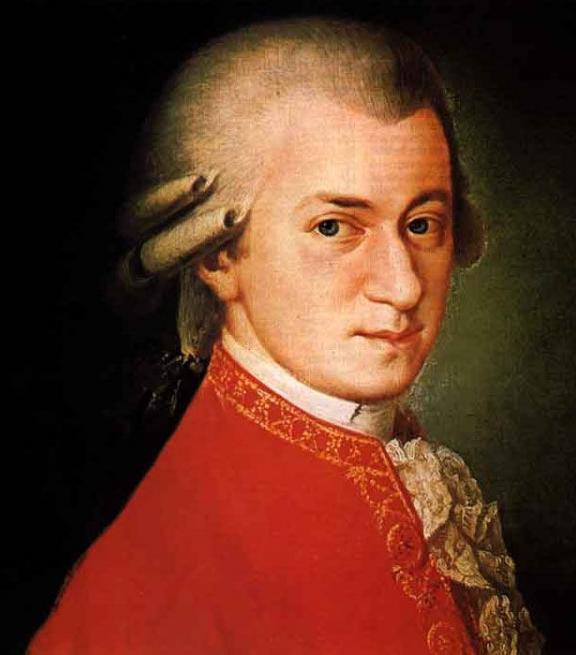 Much ink has been spent on the circumstances surrounding the composition of Mozart's Requiem. All the romantic embellishments including the poisoning of Mozart by rival Salieri and Mozart's conviction that he was writing a requiem for himself at the behest of some messenger of death have been rounded up and deliciously portrayed on stage and screen in Peter Shaffer's Amadeus, (which, not incidentally, precipitated a renewed interest in the performance of the Requiem). These scenarios, as well as the one that has Mozart rehearsing the Requiem on the last day of his life with family friends and bursting into tears during the first few bars of the Lacrymosa, are as specious as they are irresistible. Death was a far more commonplace and less romanticized occurrence in 1791 than today. Mozart and his beloved sister "Nannerl" were the only two of Leopold's seven children who survived to adulthood. Mozart and Constanze had six children, of whom only two lived longer than six months. Any manner of malaise could result in death, and the attitude of the time toward this constant possibility had to be more accepting in order to go on with daily life. As Mozart said in a letter to his ailing father in 1787, "Since death, when you come to think of it, is actually the ultimate purpose of our life, I have got to know this true, best friend of man so well that his image not only no longer frightens me, but calms and comforts me! And I thank God that He has given me the boon of providing an opportunity to get to know Him as the key to our true happiness. I never go to bed without considering that, young as I am, perhaps I shall not see the next day."
In life, Mozart's impoverishment made him only too familiar with the physical and psychological stressors of exhaustion, poor nutrition, and the exigencies of supporting his recently expanded family. With the reversal of his fortune in his last years, no work offered could he refuse. Three commissions came his way in 1791. The first was from actor friend and fellow Freemason Emanuel Schikaneder for an opera in German, The Magic Flute. Work on this had started when the summer brought another commission, this one an "intrigue opera" (La clemenza di Tito) for a celebration in Prague of the coronation of the Austrian emperor Leopold II as King of Bohemia. The third commission came by way of an emissary shortly before the coronation. He offered Mozart an unsigned letter full of flatteries and an inquiry as to whether the composer would consider writing a requiem, and for how much and how soon. With half of the requested amount placed immediately in hand and the balance to be paid on delivery, Mozart felt no need to ask questions about the source.
The mysterious intermediary was Franz Anton Leutgeb, steward of Count Franz Walsegg Stuppach. The Count had lost his wife the previous February, and the requiem was to be in her honor. A music lover, Walsegg had concerts in his home twice a week, and delighted in copying over original scores of other composers and having his guests guess their origin. "Usually we guessed the Count himself, because he did in fact occasionally compose a few trifles; he would smile at that and be pleased that he had (or so he believed) succeeded in mystifying us,” wrote one of his guests.
Mozart worked on the Requiem that summer, interrupted by the need to finish both operas. Falling ill in October at the height of The Magic Flute's popularity, he took to his bed and died of renal failure on December 5, 1791. That he foresaw his own death is given the lie by the fact that the title page of the Requiem autograph bears the date 1792 in his own hand: clearly he had planned to finish the work. In the end, he completed only the Requiem and Kyrie, and sketched the Dies Irae through the Hostias. The widowed Constanze, desperate for income, engaged one of Mozart's pupils to finish the work. Franz Xaver Süssmayer completed the orchestration and wrote the final movements (probably making use of sketches left by his teacher). The work was given to Walsegg, who gave it its first performance in 1793.
-- Hilary Hatch
Requiem, Op. 48
Gabriel Fauré (1845-1924) Fauré composed his best-known work, Requiem, in 1887, purely, as he said, for the pleasure of it. The first performance took place at the fashionable church of The Madeleine in Paris where he was choirmaster, on January 16, 1888. The work at that time consisted of five movements, the Introit and Kyrie, Sanctus, Pie Jesu, Agnus Dei, and In Paradisum. It was scored for chamber chorus and an orchestra consisting of solo violin, divided violas, divided cellos, basses, harp, timpani, and organ.
An expanded version which included the Offertory, written in 1889, and the Libera Me, composed as an independent composition as early as 1877, had its first performance in January of 1893. Bassoons, horns, and optional trumpets were added for that performance. A third and final version of the Requiem was published in 1900. This symphonic version for large choir and full orchestra was probably created at the request of the publisher, Julien Hamelle, who felt the piece would be more popular with large forces.
Of all the requiems, from Mozart’s to Britten’s, Fauré’s stands out for its serenity and soothing gentleness. As a choirmaster and organist, Fauré constantly sought to create a new kind of church music. He wanted something other than the operatic bel canto style which was popular in Paris at the time, and apart from the outsized, large-scale Germanic Romantic style which dominated the rest of Europe. The most dramatic moment in the piece is the Dies Irae, Dies Illa (“that day, day of wrath”). Remember the setting by Berlioz with its four brass bands or Verdi with two sets of off-stage trumpets? Fauré limits himself to sixteen bars and just two horns to announce “that day,” not as a separate movement but only as it appears in the Libera Me. Drawing inspiration from the tunes and rhythms of Gregorian chant, he uses subtle gradations in dynamic, color, and harmony to achieve the effects he wants.
In an interview in 1902, Fauré commented: “It has been said that my Requiem does not express the fear of death, and someone has called it a lullaby of death. But it is thus that I see death: a happy deliverance, an aspiration towards happiness above, rather than as a painful experience. The music of Gounod has been criticized for its overinclination towards human tenderness. But his nature predisposed him to feel this way. Is it not necessary to accept the artist’s nature? As to my Requiem, perhaps I have also instinctively sought to escape from what is thought right and proper, after all the years of accompanying burial services on the organ! I know it all by heart. I wanted to write something different.”
I. INTROIT AND KYRIE
Eternal rest grant them, O Lord, and let perpetual light shine upon them. A hymn, O God, becometh Thee in Sion, and a vow shall be paid to Thee in Jerusalem. O Lord, hear my prayer, all flesh shall come to Thee. Lord, have mercy. Christ, have mercy.
II. OFFERTORY
O Lord Jesus Christ, King of Glory, deliver the souls of the departed from the pains of Hell and from the deep pit; save them from the mouth of the lion, nor allow the dark lake to swallow them up, nor darkness to enshroud them. With our prayers, O Lord, we offer a sacrifice of praise; do Thou receive it on behalf of those souls whom we this day commemorate. Grant, O Lord, that they may pass from death to life, which Thou didst promise to Abraham and to his seed. Amen.
III. SANCTUS
Holy, Holy, Holy, Lord God of hosts. Heaven and earth are full of Thy glory. Glory be to Thee, O Lord, Hosanna in the highest.
IV. PIE JESU
Blessed Jesus, O Lord, grant them rest; grant them eternal rest.
V. AGNUS DEI
Lamb of God, who takest away the sins of the world, give them rest. Let perpetual light shine upon them together with Thy saints for Thou art good. Eternal rest grant unto them, O Lord, and let perpetual light shine upon them.
VI. LIBERA ME
Deliver me, O Lord, from eternal death in that awful day when heaven and earth shall be moved, when Thou shalt come to judge the world by fire. Trembling, I stand before Thee, and I fear the trial that shall be at hand and the wrath to come. That day, a day of wrath, of calamity and misery, a great day and exceeding bitter. Eternal rest grant them, O Lord, and let perpetual light shine upon them. Deliver me, O Lord.
VII. IN PARADISUM
May the angels receive thee in paradise; at thy coming may the martyrs receive thee, and bring thee into the Holy City Jerusalem. There may the choir of angels receive thee and with Lazarus, once a beggar, may thou have eternal rest.
Jonita Lattimore, soprano
Jonita Lattimore, a lyric soprano of immense vocal range and expressive musicality, has garnered plaudits for her vivid portrayals of roles ranging from Micaela to Jackie O as well as oratorio performances with major orchestras across the United States and abroad. John von Rhein from the Chicago Tribune calls Lattimore’s soprano a “richly upholstered voice with secure line and coloratura.” She “is surely destined for great things.” Her performance in Barber’s Knoxville: Summer of 1915 with Concertante di Chicago was praised by the same paper for her “dusky low notes and effortless clarion upper range.” Her latest CD, Only Heaven, a collaboration of five singers, (PS Classics) was called “the most distinctive music heard all season” (USA Today), producing “spine chills and teary eyes” (Ft. Worth Star-Telegram).
Lattimore made her Lyric Opera of Chicago debut in Kurt Weill’s The Rise and Fall of the City of Mahagonny, and was also seen on Lyric’s stage as Micaela in Bizet’s Carmen. She recently performed the role of Countess Almaviva in Le Nozze di Figaro with Tulsa Opera, and debuted in the title role in the world premiere and recording of James Niblock’s Ruth at Blue Lake Fine Arts Festival. With Houston Grand Opera she appeared as Marguerite in Faust, First Lady in Die Zauberflöte, and presented the world premieres of Harvey Milk, The Book of the Tibetan Dead, and Jackie O, which was recorded on Decca. She made her Paris debut at the Bastille Opera as Serena in Porgy and Bess.
2011/12 offers returns to the Orequesta Sinfonica Nacional de Mexico in Beethoven’s Ninth Symphony, and the Mozart Requiem with both Vermont Symphony and Louisiana Philharmonic. Among the 2010/11 highlights figured Haydn’s Paukenmesse with the Sinfonica Nacional de Mexico and concerts with the Charlotte Symphony. The 2009/10 season included a debut with Orquesta Sinfonica Nacional de Mexico and returns to the Houston Symphony, Huntsville Symphony, Grant Park Music Festival and Chicago Sinfonietta. During the 2008-09 season, Lattimore sang Serena in the Lyric Opera of Chicago’s production of Porgy and Bess, the Fauré Requiem with Eugene Symphony and Verdi’s Requiem with the Virginia and Colorado symphonies. During the summer, she returned once again to the Grant Park Music Festival, this time in Torke’s Plans.
An artist profile of Jonita Lattimore was aired on Artbeat Chicago, an arts television program on WTTW-Chicago’s Public Broadcast System entitled Home Grown Diva; and she is featured on WTTW’s Opera Philes, a program of favorite opera arias and ensembles. She is the soprano soloist in Robert Avalon’s Sextet de Julia de Burgos, recorded on Centaur.
Susan Platts, alto
British-born Canadian mezzo-soprano Susan Platts brings a uniquely rich and wide-ranging voice to concert and recital repertoire for alto and mezzo-soprano. She is particularly esteemed for her interpretations of the Mahler symphonies and song cycles.
In May of 2004, as part of the Rolex Mentor and Protégé Arts Initiative, world-renowned soprano Jessye Norman chose Ms Platts as her protégée from 26 international candidates, and has continued to mentor her ever since. With the generous support of Rolex, Ms. Platts recently commissioned a work for mezzo-soprano and orchestra from celebrated Canadian composer Marjan Mozetich: Under the Watchful Sky, comprised of three songs using ancient Chinese texts from Shi Jing (“The Book of Songs”) that explore the universal passions and tribulations of humankind, was premiered by the Québec Symphony under Yoav Talmi in November 2010.
Ms. Platts has performed at Teatro alla Scala, Teatro di San Carlo, Carnegie Hall and Lincoln Center as well as with the Philadelphia, CBC Radio, Cleveland and Minnesota Orchestras, Orchestre de Paris, National Arts Centre Orchestra, Montreal, Toronto, American, Detroit, Milwaukee and Houston Symphonies, Les Violons du Roy, Los Angeles and St. Paul Chamber Orchestras. She has collaborated with many conductors including Yannick Nézet-Séguin, Roberto Abbado, Leon Botstein, Sir Andrew Davis, Andreas Delfs, Christoph Eschenbach, Jane Glover, Eliahu Inbal, Jeffrey Kahane, Bernard Labadie, Kent Nagano, Peter Oundjian, Itzhak Perlman, Bramwell Tovey, Osmo Vänska and Pinchas Zuckerman. Ms Platts has appeared on many distinguished art-song series including twice for both the Vocal Arts Society at the Kennedy Center in Washington, D.C. and Ladies Morning Musical Club in Montreal, and both the Frick Collection on Lincoln Center “Art of the Song” series in New York City.
Ms. Platts has recorded Mahler’s Das Lied von der Erde for Fontec Records with Gary Bertini conducting the Tokyo Metropolitan Orchestra, a CD of dramatic sacred art songs with pianist Dalton Baldwin, Gustav Mahler's Lieder eines fahrenden Gesellen with the Smithsonian Chamber Players and Santa Fe Pro Musica for Dorian Records and Brahms Zwei Gesänge with Steven Dann and Lambert Orkis on the ATMA label. Her first solo disc of songs by Robert Schumann, Clara Schumann and Johannes Brahms on the ATMA label enjoyed considerable critical acclaim.
Richard Clement, tenor
Grammy-winning American tenor Richard Clement has performed with most of America’s major orchestras and music directors, bringing tonal beauty and superb musicality to repertoire from the baroque to the contemporary. He recently earned particular acclaim for the title role of Elgar's The Dream of Gerontius with the North Carolina Symphony and Sacramento Choral Arts Society and Orchestra. In addition he premiered--and recorded--Theofanides' The Here and Now with Robert Spano and the Atlanta Symphony, including performances in Atlanta and at New York’s Carnegie Hall (he has also sung Messiah and concert performances of John Adams’ Doctor Atomic with them). Among the most in-demand tenors for Beethoven’s Ninth Symphony, invitations include the Brooklyn Philharmonic, Saint Paul Chamber Orchestra; New Jersey, Milwaukee, San Antonio, Oregon, Memphis, San Diego, Baltimore, Nashville, Phoenix, Colorado and Toledo Symphonies. He sang Elijah with the Memphis and Charlotte Symphonies; the Verdi Requiem with the Santa Rosa and New Jersey Symphonies and Chautauqua Music Festival Orchestra; Beethoven's Missa solemnis with the New Mexico Symphony Orchestra and National Arts Centre Orchestra; and Haydn’s Die Schöpfung with the Colorado and Puerto Rico Symphonies. In addition Mr. Clement has performed Belmonte in Mozart’s Die Entführung aus dem Serail with Leonard Slatkin and the National Symphony; Rachmaninoff’s The Bells with Jeffrey Kahane and the Colorado Symphony; Orff’s Carmina Burana with Neeme Järvi and the Detroit Symphony, and two Mozart programs with Boston’s Händel & Haydn Society under Grant Llewellyn. He also sang Mendelssohn’s Die erste Walpurgisnacht and Second Symphony with Kurt Masur and the Israel Philharmonic; Toch’s Cantata of the Bitter Herbs with the Czech Philharmonic; the Mozart Requiem with the Saint Louis and Delaware Symphonies; Stravinsky’s Oedipus Rex with Charles Dutoit and the Montreal Symphony; Kernis’ Millenium Symphony with the Minnesota Orchestra; Tippett’s A Child of Our Time with Jeffrey Kahane and the Santa Rosa Symphony; The Bells with Leon Botstein and the American Symphony in Lincoln Center’s Avery Fisher Hall; Haydn’s Seven Last Words of Christ and Beethoven’s Missa solemnis with the Saint Paul Chamber Orchestra. He has been guest soloist with the Cleveland and Philadelphia Orchestras; Houston, Toronto, San Francisco and Cincinnati Symphonies, and collaborated with such conductors as Wolfgang Sawallisch, Jesús López-Cobos, Bobby McFerrin, Daniel Harding, Christopher Hogwood, Carlo Rizzi, John Mauceri, Marin Alsop, Hugh Wolff and James Conlon.
Festival engagements include Tanglewood (concert performance of Act III of Verdi’s Falstaff), Beethoven #9 at both Grant Park and the Hollywood Bowl, and the Bach B Minor Mass with Seiji Ozawa at Japan’s Saito Kinen Festival.
Mr. Clement’s considerable operatic credentials include Pedrillo in Mozart’s Die Entführung aus dem Serail with Sir Colin Davis and the New York Philharmonic; Tamino in Mozart’s Die Zauberflöte at Belgium’s De Vlaamse Opera and with the Colorado Symphony. At the Vancouver Opera his roles include Nanki-Poo (The Mikado), Ferrando (Così fan tutte), Little Bat (Susannah) and Don Ottavio (Don Giovanni); Ernesto (Don Pasquale) at Glimmerglass Opera; Vanya (Katya Kabanova) and To-No-Chujo (Tale of the Genji) at Opera Theater of St. Louis; Belmonte (Entführung) with the Boston Baroque; Lensky (Eugen Onegin) and Nemorino (L’elisir d’amore) at Opera Festival of New Jersey; Candide, Lockwood (Wuthering Heights) and Fenton (Falstaff) at Boston Lyric Opera; and Albert Herring with the Atlanta Opera.
Mr. Clement studied voice at Georgia State University and the Cincinnati Conservatory, where he received his Master of Music degree. He was a Tanglewood Music Festival Fellow, has been a member of the Houston Grand Opera Studio and was a recipient of the Richard Tucker Music Foundation Jacobson Study Grant. Recordings include Britten’s War Requiem with the Washington Choral Society, Bartók’s Cantata Profana with the Atlanta Symphony (both Grammy winners) and Tchaikovsky’s Pique Dame. Mr. Clement is currently on staff as a visiting lecturer at Atlanta's Georgia State University.
Kevin Deas, bass
Kevin Deas has gained international acclaim as one of America’s leading basses. Lauded for his “burnished sound, clarity of diction and sincerity of expression” and “fervent intensity” by Chicago Tribune critic John von Rhein, Deas has been variously called “exemplary” (Denver Post), “especially fine” (Washington Post) and possessing “a resourceful range of expression” (The Cincinnati Enquirer). He is perhaps most acclaimed for his signature portrayal of the title role in Porgy and Bess, having sung it with the New York Philharmonic, Philadelphia Orchestra, National Symphony, the St. Paul Chamber Orchestra, San Francisco, Atlanta, San Diego, Utah, Houston, Baltimore and Montreal symphonies and the Ravinia and Saratoga festivals.
2011/12 brings repeat visits to the National Philharmonic, return engagements with Boston Baroque, Musica Sacra, Oratorio Society of New York and Princeton Pro Musica, as well as the Requiem by both Fauré and Mozart with the Vermont Symphony and a Dvorak program with the Buffalo Philharmonic and North Carolina Symphony.
Deas’ 2010/11 season highlights consisted of appearances with the Calgary Philharmonic in Porgy and Bess, Boston Baroque with Messiah, a Richmond Symphony Beethoven Symphony No. 9, St. John Passion at the Winter Park Festival, Philip Glass’ Passion of Ramakrishna with Pacific Symphony, Paukenmesse with Orquesta Sinfonica Nacional de Mexico and Beethoven’s Ninth Symphony with the National Symphony of Costa Rica on occasion of the orchestra’s 70th anniversary.
Other recent highlights include Beethoven’s Ninth Symphony under the baton of Daniel Barenboim with Filarmonica della Scala in Accra celebrating the 50th anniversary of the founding of Ghana, Copland’s Old American Songs and Mozart's Marriage of Figaro with the Chicago Symphony, Messiah with the Cleveland Orchestra, Brooklyn Philharmonic and Handel & Haydn Society, an opening performance at the Newport Jazz Festival with the Dave Brubeck Quartet, Beethoven’s Symphony No. 9 with the Colorado Symphony and Tokyo Symphony Orchestra, and performances of Brubeck’s To Hope! in Salzburg and Vienna. He also sang at Lincoln Center's Mostly Mozart Festival and Carnegie Hall, Elgar’s Dream of Gerontius with the Chicago Symphony and Barenboim, Mozart’s Requiem with the Atlanta Symphony, and How the Grinch Stole Christmas with the Houston Symphony.
A strong proponent of contemporary music, Kevin Deas was heard at Italy’s Spoleto Festival in a new production of Menotti's Amahl and the Night Visitors in honor of the composer's eighty-fifth birthday, videotaped for worldwide release. His 20-year collaboration with Dave Brubeck have taken him to Salzburg, Vienna and Moscow in To Hope! and his Gates of Justice were presented in a gala performance in New York during the 95/96 season. He also performed Tippet's Child of our Time with the Vancouver Symphony and in 1992 debuted with the Chicago Symphony in a concert version of X: The Life and Times of Malcolm X by Anthony Davis, later repeated in New York and recorded.
Kevin Deas’ list of recordings is as varied as it is impressive: He has recorded for Decca/London Die Meistersinger with the Chicago Symphony under the late Sir Georg Solti and Varèse's Ecuatorial with the ASKO Ensemble under the baton of Ricardo Chailly. Other releases include Bach's B minor Mass and Handel's Acis & Galatea on Vox Classics and Dave Brubeck's To Hope! with the Cathedral Choral Society on the Telarc label.
Keep reading!
Friday, February 25, 2011
Program notes: March 4-6

Click here for information about the March 4 performance in Bellows Falls.
Click here for information about the March 5 performance in Burlington.
Click here for information about the March 6 performance in Rutland.
Voyage for String Orchestra
John Corigliano (1938- )
"I care deeply about communicating with my audience," John Corigliano said in an interview.. "There is just no reason why a composer shouldn’t be able to reach large audiences in a worthwhile way, even if he uses advanced techniques….If a piece is put together with care for detail and, at the same time, with attention to the overall shape, and if the composer takes note that most listeners will not hear most of his technical procedures but will be able to follow that shape, then there is a good chance the music will communicate."
Corigliano has practiced what he preaches. His Symphony No. 1, commissioned by the Chicago Symphony Orchestra in 1990, earned the composer the 1991 Grawemeyer Award for Best New Orchestral Composition--the symphonist’s Nobel Prize. The next year, his opera The Ghosts of Versailles premiered at the Metropolitan Opera, to wide acclaim. That same year, 1991, he was elected to the American Academy and Institute of Arts and Letters.
His successes in the 90s distract from his prior output, which contains work in all major genres including film. His soundtrack for the motion picture Altered States (1980) was nominated for an Academy Award. The source of the present work goes back even farther: to 1971, when the composer made an a cappella choral setting of Baudelaire’s 1857 poem "L’Invitation au Voyage.”. For it he used an English translation by Richard Wilbur, the American poet and linguist who provided the libretto to Leonard Bernstein’s comic operetta Candide. The composer notes that "Wilbur’s poignant setting pictures a world of obsessive imagination--a drugged version of heaven full of sensual imagery." The music reiterates a strain, inspired by the words "There, there is nothing else but grace and measure, richness, quietness and pleasure"--an image which appears repeatedly through Baudelaire’s voluptuous poetry. In 1978, the composer arranged the work for string orchestra under the title Voyage.
Violin Concerto in a minor, Op. 53
Antonin Dvořák (1841-1904)
The great popularity of Dvořák’s “New World” Symphony and his Slavonic Dances has possibly obscured the surpassing beauty and substantial merit of some of his other works, including the Violin Concerto. With its sustained flow of melody, its harmonic richness and robust orchestration, this is a compelling score which deserves a place in the violin concerto repertoire along with those of Brahms and Tchaikovsky.
Dvořák wrote his Violin Concerto in 1879, while spending the summer as a guest of his friend Alois Göbl, a talented amateur musician and steward on a wealthy nobleman’s estate. It was a happy time for the 37 year-old former village butcher. The year before, Dvořák’s first set of Slavonic Dances had achieved an instant success. His publisher, Fritz Simrock of Berlin, who had paid the still unknown composer a flat fee of only 300 marks, raked in a fortune.
But Dvořák did not go wholly unrewarded. Newspapers throughout Europe hailed him as a new musical personality. One British tabloid even sensationalized the composer with the headline, “From Butcher to Baton.” Commissions poured in, among them a bid for a new concerto from Joseph Joachim, the most famous violinist of the day. (Joachim had helped both Brahms and Bruch with their concertos, which were dedicated to him.) But the finished score did not please Joachim. He returned it, asking for extensive revisions of the solo part. Even after Dvořák made the requested changes, Joachim remained dissatisfied. After two years had passed, Dvořák offered the first performance of the piece to the Czech violinist Frantisek Ondřicek, who played the premiere in Prague in the autumn of 1883. The occasion was a personal triumph for Dvořák, who took special pride in having this event take place in his native country.
The concerto is in three movements, with the opening Allegro linked without a break to the central Adagio. Dvořák firmly rejected his publisher’s suggestion to allow the customary pause between these two movements. He felt strongly that the continuity emphasized the emotional unity of the reflective and lyrical linked movements, contrasting them more effectively with the gay whirl of the Finale. In the first movement, there are a number of striking phrases which are developed in familiar symphonic style, but instead of completing the movement with a traditional reprise of the opening material, Dvořák instead writes a cadenza-like passage for soloist and orchestra which serves as a bridge to the second movement. The slow movement develops from the serenely arching melody sung at the outset by the solo violin, and closes with a poetic return of the same melody, now in the French horn. The last movement opens with a ten-bar theme in the syncopated style of a Czech furiant. This melody returns again and again in different garb but with the persistence of a rondo refrain. The folk-vein of the finale is a perfect example of the spirit which critic David Hall says “offers a glimpse into the very soul of the Czech people.”
Bella Hristova, violin
Violinist Bella Hristova won First Prize in the 2008/09 Young Concert Artists International Auditions, where she was also awarded the Rhoda Walker Teagle Prize--which sponsored her New York debut in the Young Concert Artists Series at Merkin Hall--the Miriam Brody Aronson Award, the Ruth Laredo Memorial Award, the Candlelight Concert Society Concert Prize, and the Lied Center of Kansas Concert Prize.
Hristova made debut appearances in the Young Concert Artists Series at the Kennedy Center in Washington DC, at the Isabella Stewart Gardner Museum in Boston, the Washington Center for the Performing Arts in Olympia, and the University of Florida. She also appeared at the Santa Fe Chamber Music Festival and the Cartagena Festival Internacional de Musica, and soloed with the Owensboro (KY), Johnstown (PA), DuPage (IL), and Indianapolis symphonies. Also during the 2009/10 season, Hristova performed Bach’s Concerto for Three Violins with celebrated violinists Cho-Liang Lin and Kyoko Takezawa, and Bruch’s Scottish Fantasy with Indiana University’s Philharmonic Orchestra, as winner of their 2009 Concerto Competition. She has also been a guest artist with the New York String Orchestra conducted by Jaime Laredo.
As winner of First Prize in the 2007 Michael Hill International Competition in New Zealand, Hristova made a critically acclaimed concert tour of the country and recorded a CD of solo violin works by the Belgian virtuoso Charles de Bériot for the Naxos label. She was awarded a career grant from the Salon de Virtuosi in New York and performed as a new member of Chamber Music Society Two at Lincoln Center.
Hristova has appeared on Garrison Keillor’s A Prairie Home Companion on National Public Radio. Festival appearances include The Grand Teton Festival, Music@Menlo, Ravinia’s Steans Institute, Music from Angel Fire, and the Marlboro Music Festival.
Born in Pleven, Bulgaria in 1985, Hristova began violin studies at the age of six. At twelve, she participated in master classes with Ruggiero Ricci at the Mozarteum in Salzburg. Since the age of thirteen, she has lived in the United States, working with Stephen Shipps. In 2003, Hristova entered The Curtis Institute, where she worked with Ida Kavafian and studied chamber music with Steven Tenenbom. She is currently pursuing an Artist Diploma with Jaime Laredo at Indiana University. Hristova plays a 1655 Nicolò Amati violin, once owned by violinist Louis Krasner.
Symphony No. 3 in a minor, Op. 56, “Scotch”
Felix Mendelssohn (1809 - 1847)
Goethe said that he was “born on a lucky day”; his name, Felix, is Latin for “happy man.” The critics who subscribe to the theory that great art is borne of the sufferings of the artist are those who feel that Mendelssohn never planted both feet firmly in the pantheon of great composers, presumably because his music lacks that certain note of angst. Although this criticism seems artificial, it is true that Mendelssohn enjoyed luxuries and encouragements that few of his counterparts experienced.
Mendelssohn was born to a family of position. His grandfather, Moses, was one of the great intellectual figures of the 18th century and his father a wealthy Hamburg banker who said of himself, “I am but a dash uniting Moses and Felix Mendelssohn.” The composer and his beloved older sister Fanny began piano lessons at a tender age with their mother, and were nurtured so carefully that by the age of 10 Mendelssohn had already gained prominence. (His sister, who was at least as gifted as her brother, was typically sacrificed to the mores of the age and not permitted to pursue an unseemly career for a woman.) The only stumbling block which existed for Mendelssohn was removed by his father, who knew that many avenues were closed to a musician who was a Jew. For the sake of his son he converted his family to Protestantism, for him a step taken with repugnance out of necessity, and later appended the name “Bartholdy” to “Mendelssohn” to distinguish his family as non-Jewish.
Mendelssohn was personable and physically attractive, engendering affection and admiration wherever he went. By age 10, the precocious boy had debuted as a concert pianist and had a composition performed in Berlin. By his teens he had already written symphonies, operas, the Octet for Strings and the Overture to a Midsummer Night’s Dream. At 20, Mendelssohn engineered two inspired performances of Bach’s Passion According to St. Matthew and saw the early fulfillment of an ambition to rescue Bach’s music from the oblivion into which it had passed with the general music public. After achieving this fortuitous service in his homeland, he embarked on extensive travel in other countries: England, Scotland, Italy and France.
Mendelssohn’s visit to Scotland lasted only three days, but the country suffused him with impressions: “Everything here looks so stern and robust, half-enveloped in haze or smoke or fog…”; the men “with their long red beards, tartan plaids, bonnets and plumes, bare knees, and their bagpipes in their hands.” He attended a bagpipe competition which his letters describe as an excruciating experience. He swam in the sea and visited Holyrood “where Queen Mary lived and loved. There is a little room to be seen there, with a winding staircase leading up to it. There the murderers ascended and finding Rizzio in the little room, dragged him out, and three chambers away is a dark corner where they killed him. The adjoining chapel is now roofless; grass and ivy grow abundantly in it; and before the altar, now in ruins, Mary was crowned Queen of Scotland. Everything around is broken and moldering, and the bright sky shines in. I believe I found today in that old chapel the beginning of my Scotch Symphony.”
That same day Mendelssohn wrote the opening bars of his Symphony, and continued to work on it during his Italian trip the following year. Eventually a full twelve years passed before he conducted the premiere of the work in March 1842 at the Leipzig Gewandhaus. Mendelssohn used the appellation “Scotch” whenever he referred to the symphony in his correspondence, but this nickname is just that, and does not appear on the first edition of the score. This score does include his specific directions that the four movements of the work be played without interruptions “that murder the mood.”
The introduction to the first movement (Andante con moto; Allegro un poco agitato) begins with the phrase that Mendelssohn captured in the ruined chapel, presented mournfully by violas and oboes. This idea builds to the agitated main section and appears in variation in the new key of e minor. The recapitulation recalls the opening a minor section and leads without pause to the second movement, Vivace non troppo. A solo clarinet plays the theme over tremolo violins and violas. There is a clear thematic relationship to the basic thought of the first movement but the treatment is said to be derived from an old pentatonic bagpipe melody, “Charlie is My Darling.” This Scherzo follows a traditional sonata-allegro form, and a short transition leads to the third movement, Adagio. The two main ideas here are heard in the intimate and flowing violin melody and somber chords of the winds in a dotted rhythm. The final movement (Allegro vivacissimo) begins with a dotted rhythm cascade in the violins, who present a breezy melody in thirds and sixths against chords in the violas, bassoons and horns. The second theme is a lyrical passage in the woodwinds over an organ point in the first violins, leading to a majestic coda for full orchestra.
--Hilary Hatch
Keep reading!
Thursday, January 13, 2011
Program notes: January 22 Masterworks & January 23 Sunday Matinee concerts

The VSO returns to the Flynn Center for the Performing Arts in Burlington and the Paramount Theatre in Rutland for the third installment of the Masterworks Series and the second installment of the Sunday Matinee Series, respectively. Jaime Laredo and the VSO will be joined by young pianist Anna Polonsky, playing Mozart's Piano Concerto No. 27, K. 595. The program will open with the Overture to Il Signor Bruschino by Rossini. The evening will conclude with Beethoven's Symphony No. 4. Keep reading for Ms. Polonsky's bio and the program notes for the evening.
Overture to Il Signor Bruschino
Gioacchino Rossini (1792-1868)
Il Signor Bruschino is a one-act operatic farce in fifteen scenes, based on a play called “Le fils par hasard” by Alissan de Chazet. The lighthearted, energetic overture is one of several by Rossini to have gained considerable importance in the modern concert repertoire.
From 1810-1813, the young Rossini composed four Italian farces. These types of short works were popular in Venice at the time. The pieces were intimate, with a cast of five to eight singers, always including a pair of lovers, at least two comic roles, and one or more minor characters. The style called for much visual comedy improvised by the players, and often a compulsive verbal “tic.” (In this one, the namesake constantly repeats the phrase, “Oh, it’s so hot!”) Compared to other genres of opera, acting ability and comedic talent were more important than vocal prowess.
There has been some speculation about the new musical effect called for in the overture. At several points the second violins are instructed to tap their bows on their music stands. One theory (which must be spurious) is that Rossini was too lazy to think of notes for them to play in those spots, and substituted bow taps instead. More likely he was intrigued to experiment with a different sonic effect.
Piano Concerto No. 27 in Bb Major, K. 595
Wolfgang Amadeus Mozart (1756-1791)
No other composer in history has rivaled Mozart's mastery of the piano concerto. His greatest triumphs as a composer and performer were in this form. K. 595, his last piano concerto, was written at the very end of his short life, at a time when his popularity had dwindled to the point where he was in desperate financial straits. The mood of the piece is gentle, however, not bitter, seemingly reflecting Mozart's desire to transcend earthly cares and tribulations. He premiered it himself on March 4, 1791. The sensuousness of the first movement is reminiscent of his comic opera Cosi fan tutte, which he had just finished when writing the concerto. Both main themes are graceful, with darkening harmonic fluctuations in the development section. The piano weaves a fabric of arpeggios and scales against which orchestral forces trade snippets of thematic material. The slow movement is in Mozart's favorite key, Eb Major, and is characterized by a serene tenderness. Could Mozart have been composing an adieu? The finale harkens back to the merry "hunting horn" themes of other earlier rondos. Interestingly, shortly after he finished the concerto, Mozart used this same melody set to the words "Come sweet May, and make the trees grow green again" in his song "Yearning for Spring."
Anna Polonsky, piano
Anna Polonsky is widely in demand as a soloist and chamber musician. She has appeared with the Moscow Virtuosi and Vladimir Spivakov, the Buffalo Philharmonic with JoAnn Falleta, the St. Luke’s Chamber Ensemble, the Columbus Symphony Orchestra, the Memphis Symphony, the Chamber Orchestra of Philadelphia, and many others. Polonsky has collaborated with the Guarneri, Orion, and Shanghai Quartets, and with such musicians as Mitsuko Uchida, David Shifrin, Richard Goode, Ida and Ani Kavafian, Cho-Liang Lin, Arnold Steinhardt, Anton Kuerti, Gary Hoffman, and Fred Sherry. She is regularly invited to perform chamber music at festivals such as Marlboro, Chamber Music Northwest, Seattle, Music@Menlo, Cartagena, Bard, and Caramoor, as well as at Bargemusic in New York City. Polonsky has given concerts in the Amsterdam Concertgebouw, the Vienna Konzerthaus, the Alice Tully Hall, and the Stern, Weill and Zankel Halls at Carnegie Hall, and has toured extensively throughout the United States, Europe, and Asia. A frequent guest at the Chamber Music Society of Lincoln Center, she was a member of CMS Two during 2002-2004. In 2006 she took a part in the European Broadcasting Union's project to record and broadcast all of Mozart's keyboard sonatas, and in the spring of 2007 she performed a Carnegie Hall solo recital, inaugurating the Emerson Quartet’s Perspectives Series.
Polonsky made her solo piano debut at the age of seven at the Special Central Music School in Moscow, Russia. She emigrated to the United States in 1990, and attended high school at the Interlochen Arts Academy in Michigan. She received her Bachelor of Music diploma from the Curtis Institute of Music, where she worked with the renowned pianist Peter Serkin, and continued her studies with Jerome Lowenthal, earning her Master's Degree from the Juilliard School. Polonsky was a recipient of a Borletti-Buitoni Trust Fellowship in 2003. With violist Michael Tree and clarinetist Anthony McGill, she is a member of the newly formed Schumann Trio. In addition to performing, she serves on the piano faculty of Vassar College. She is a Steinway Artist.
Symphony No. 4 in Bb Major, Op. 60
Ludwig van Beethoven (1770-1827)
It is a rare annotator who betrays no curiosity regarding the motivation behind the composition of great works. Although one need not know anything of the composer to enjoy his or her music on an empirical basis, there is sometimes a certain intimacy achieved through empathy with a composer’s situation or state of mind. Yet Beethoven himself is such a welter of emotions that to search for a particular creative wellspring is to invite confusion.
In the case of his fourth symphony, there are two extraordinarily divided camps. Biographer Romain Rolland speaks of the spring of 1806, saying, “The Fourth Symphony, composed in this year, is a pure fragrant flower which treasures up the perfume of these days, the calmest in all his life.” On the side of bliss, we also find the oracle Grove: “Beethoven must have been inspired by the very genius of happiness when he conceived the many beautiful themes of this joyous composition.” It is, then, hard to believe that New York Philharmonic annotator Downes can speak of the same man and time in this fashion: “Beethoven’s gentle fourth symphony was born in an explosive year—explosive in the composer’s inner world and in the brutal reality that surrounded him. For Beethoven, 1806 began with emotional and physical turmoil that would have unstrung a lesser man.”
It is proof of Beethoven’s protean personality that all of these descriptions are probably true. In fact, 1806 is the year the composer became engaged to Countess Theresa von Brunswick, most likely the famous “Immortal Beloved.” The joy of his deep love must have, at the same time, brought the despair he was always to know when his romantically idealized love objects failed to live up to his impossible standards. Artistically, Beethoven was dealing with his cherished but problematic opera Fidelio--frustrated by production inadequacies, a dishonest theater manager, and his own dissatisfactions. The introduction to the opening of Act II was revised at least 18 times! Politically, the social structure of centuries was disintegrating in Napoleon’s wake, and the weakened aristocracy returned to a recently occupied Vienna of uncertain future.
For whatever reasons, in this period of time Beethoven enjoyed a tremendous burst of creativity, almost simultaneously composing the Waldstein and Appassionata piano sonatas, the three Razumovsky string quartets, the fourth piano concerto, the violin concerto, and the fourth and fifth symphonies.
Schumann described the Fourth as “a slender Greek maiden between two Norse giants.” Certainly it does not reflect the epic proportions of the Eroica or the wrestle with fate in the Fifth. It dwells in a serener plane of tenderness and mystery.
The opening movement goes from dark to light, the somber opening interrupted by six repetitions of the same chord leading to a buoyant allegro. The recapitulation of this theme is later introduced by a crescendo described by Berlioz as “one of the most skillfully contrived things we know of in music…you might compare it to a river whose calm waters suddenly disappear and only leave the subterranean bed to plunge with a roar in a foaming waterfall.”
The slow movement is in rondo and sonata forms, and the placid melody occurs four times, enhanced by a gently rocking accompaniment. The third movement is a roughhouse scherzo or minuet, and, as in the Seventh Symphony, the trio (featuring the woodwinds) is played twice; the minuet repeated each time.
Berlioz describes the closing Allegro ma non troppo thus: “Perpetual motion in tone, flashing and glittering with tunefulness and fun. The movement opens with a suggestion of Bach, and presently we are aware that Beethoven has assimilated the spirit of Mozart and Haydn as at an earlier age he had paid them the compliment of assimilation.”
--Hilary Hatch
Keep reading!
Thursday, January 21, 2010
Program Notes: January 29-31
The VSO takes it on the road this month with a stellar program featuring a World Premiere of David Ludwig's Symphony No. 1, "Book of Hours," a performance of Beethoven's Emperor Concerto played by world-renowned pianist André Watts, and Mendelssohn's Hebrides. Jaime Laredo leads the charge in Bellows Falls (1/29), Burlington (1/30), and Rutland (1/31). Read the program notes and watch a multimedia program note on David's piece after the jump.
The Hebrides (Fingal’s Cave), Op. 26
Felix Mendelssohn (1809-1847)
By the time Mendelssohn was in his late teens, he had already achieved two compositional triumphs: his Overture to A Midsummer Night's Dream and his Octet for Strings. His talents and gifts extended beyond music as well: in 1826 he enrolled at the University of Berlin, studying a variety of subjects from geography to aesthetics. He was quite a sketcher of landscapes, and he loved to travel.
It was on one particular trip to Scotland that Mendelssohn received the inspiration for The Hebrides. Along with his friend Karl Klingemann, Mendelssohn stopped first in Edinburgh, and then continued west to the Inner Hebridean islands, sketching landscapes as he went. On a sea voyage to the island of Staffa, Mendelssohn had his first glimpse of the spectacular Fingal's Cave, named for a hero of Scotch and Irish legend. Visitors can be rowed directly into the cave, two hundred and twenty-seven feet long, richly decorated with seaweeds, lichens, and stalactites, where the constant murmuring of the waves has given it another Gallic name, “the cave of music.” The story goes that Mendelssohn, upon first seeing the grandeur of the cave with its organ-like pillars of red-brown basalt and hearing the musical sounds made by the rushing water, immediately began to draft the opening melodies of the overture right there in the boat. In actuality, Mendelssohn's correspondence suggests that the themes occurred to him on the mainland of the Inner Hebrides before embarking. (While on board, Klingemann's writings confirm, Mendelssohn was much too seasick to be inspired!) In his letters, the composer refers to the work both as “The Hebrides” and “The Solitary Isle.” The first published score was entitled “Fingal’s Cave,” but the orchestra parts said “The Hebrides.” It has become customary to use both of the last designations.
The beginning motive, which reappears throughout, suggests the sound of waves rolling in and out of the cavern. In his three revisions of the piece, Mendelssohn tinkered extensively with the development section, which he worried "tastes more of counterpoint than of whale oil and seagulls." An exciting coda brings to a close a work which Wagner asserted to be "one of the most beautiful pieces we possess."
Symphony No. 1, "Book of Hours"
David Ludwig (1972- )
I. Matins & Lauds: i thank You God for most this amazing* – E.E. Cummings (1894-1962)
i thank You God for most this amazing
day: for the leaping greenly spirits of trees
and a blue true dream of sky; and for everything
which is natural which is infinite which is yes
(i who have died am alive again today,
and this is the sun's birthday; this is the birth
day of life and love and wings: and of the gay
great happening illimitably earth)
how should tasting touching hearing seeing
breathing any-lifted from the no
of all nothing-human merely being
doubt unimaginable You?
(now the ears of my ears awake and
now the eyes of my eyes are opened)
*“i thank you God for most this amazing” from COMPLETE POEMS, by E.E. Cummings, edited by George J. Firmage, used with the permission of Liveright Publishing Corporation. Copyright © 1950, 1978, 1991 by the Trustees for the E.E. Cummings Trust. Copyright © 1979 by George James Firmage.
II. Prime: from The Book of Hours – Rainer Maria Rilke (1875-1926)
Ich lebe mein leben im wachsenden Ringen,
die sich über die Dingen ziehen.
Ich werde den letzen vielleicht nicht vollbringen,
aber versuchen will ich ihn.
Ich kreise um Gott, um den uralten Turm,
und ich kreise jahrtausendelang;
und ich weiß nocht nicht: bin ich ein Falke, ein Sturm
oder ein großer Gesang.
I live my life in growing rings
which spread around the things about me.
I might never accomplish the last one,
but that is what I will try to do.
I make circles around God, around that most ancient tower,
and I circle a thousand years long;
and I still do not know: am I a falcon, a storm
or a great song.
III. Terce: Sand – Sara Goudarzi (b. 1976)
If my memories were sand
with every wave they'd start anew
And dance
unconscious of earlier strikes to their grain
And journey
to every shell
coral
and cranny
They'd sit on a child's foot and play in the Sun
or castle in the blue
They'd forget the once river rock they were
banging head with every curve
shattering each day
If my memories were sand
they'd merrily play wave after wave
and forget each spot every few
©2004 Sara Goudarzi Reprinted with the permission of the author. This poem first appeared in The Adirondack Review.
IV. Sext: The winds have died, but flowers go on falling; – Ryokan (1758-1831)
The winds have died, but flowers go on falling;
birds call, but silence penetrates each song.
The Mystery! Unknowable, unlearnable.
The virtue of Kannon.
V. None: Zwielicht – (“Twilight”) Joseph von Eichendorff (1788-1857)
(Music from R. Schumann’s Liederkreis)
Dämmrung will die Flügel spreiten,
Schaurig rühren sich die Bäume,
Wolken ziehn wie schwere Träume -
Was will dieses Grau'n bedeuten?
Hast ein Reh du lieb vor andern,
Laß es nicht alleine grasen,
Jäger ziehn im Wald und blasen,
Stimmen hin und wieder wandern.
Hast du einen Freund hienieden,
Trau ihm nicht zu dieser Stunde,
Freundlich wohl mit Aug' und Munde,
Sinnt er Krieg im tück'schen Frieden.
Was heut müde gehet unter,
Hebt sich morgen neu geboren.
Manches bleibt in Nacht verloren -
Hüte dich, bleib wach und munter!
Twilight begins to spread its wings,
The trees stir ominously,
Clouds come like heavy dreams --
What does this gloominess mean?
If you have a favorite little deer,
Do not let it graze alone;
Hunters roam the forest and blow horns,
Voices wandering in and out.
If you have a friend down here below,
Do not trust him in this Hour;
He might he seem friendly in eye and mouth,
But he makes plans for war in treacherous peace.
What today descends wearily down,
Will lift itself tomorrow born anew.
Many things at night go lost--
Guard yourself--be awake and alert!
VI. Vespers: from the Book of John 1:5
In the beginning was the Word, and the Word was with God, and the Word was God.
The same was in the beginning with God.
All things were made by him; and without him was not any thing made that was made.
In him was life; and the life was the light of men.
And the light shineth in darkness; and the darkness comprehended it not.
VII. Compline: Hashkiveinu (“Lay us down”) – traditional
Hashkiveinu Adonai Eloheinu l'shalom,
v'haamideynu malkeinu l'chayim,
ufros aleinu sukat sh'lomecha,
v'takneinu b'eitzah tovah mil'fanecha,
v'hoshieinu l'maan sh'mecha
V'hagen baadeinu,
v'haseir meialeinu oyeiv, dever
v'cherev v'raav v'yagon,
v'haseir satan mil'faneinu umeiachareinu,
uvtzeil k'nafecha tastireinu,
ki El shomreinu umatzileinu atah,
ki El chanun v'rachum atah
Ushmor tzeyteinu u-vo-einu,
l'chayim ulshalom,
mei-atah v'ad olam,
ufros aleinu sukat sh'lomecha,
Baruch atah Adonai, hapores sukat shalom aleinu,
v'al kpl amo Yisrael, v'al Yerushalayim.
Grant us, oh God, that we lie down in peace
and raise us up, our Guardian, to life renewed.
Spread over us the shelter of your peace.
Guide us with Your good counsel; for your Name’s sake, be our help.
Shield and shelter us beneath the shelter of your wings.
Defend us against our adversaries,
illness, war, famine, and sorrow,
Remove evil from before us and behind us.
For you, God, watch over us and deliver us.
For you, God, are gracious and merciful.
Guard our going out and coming in,
to life and to peace, for eternity.
Spread over us the shelter of your peace.
Blessed are you, oh God, whose shelter of peace is spread over us.
Over all of your people of Israel and over Jerusalem.
A thousand years ago, you would find a “Book of Hours” in many homes. It was an illuminated prayer book, helping the reader keep God in mind during the hours of the day with prayers, psalms, and biblical excerpts. Some were quite simple, with modest illustrations and text. Others were luxuriously decorated and adorned in gilt illumination.
I think about the importance of prayer in our lives–more as a function of hope than as of a religious expression, even though that is its principal source. Prayer is common to all societies and to people in all walks of life, in some form or another. There are basic kinds of prayer: supplication, exaltation, those that show our humility, and those that ask for great things from the ether. But whatever the purpose, all prayer unites us as human beings. As we seem to perilously catapult into the 21st Century, I decided that my first symphony should be like a contemporary Book of Hours; a kind of musical “magical realist’s” take on what this prayer book would look like today, and, ultimately, a reflection of hope.
Taking my musical cues from the form of a traditional “Book of Hours,” I set the piece in seven movements from the Liturgy of the Hours that the Book helped to maintain. I then chose accompanying poems from different times, places, and cultures to inspire the piece. Some are religious meditations, while others are taken directly from scripture. Others, still, are modern invocations of desires or dreams. And so, as the times of day are kept in these poems–from the early morning and bright breaking of dawn to the black of night–so too does my own Book of Hours take the journey from brightness to darkness over the course of its twenty-five minutes.
The first movement, informed by the Cummings poem “i thank You God for most this amazing,” opens with the idea of the quiet solitude before dawn, represented in orchestral unity. This unison motive introduces each movement, one way or another, throughout the piece, but is not fully realized until the very end. After the brightness of the first movement are the hopeful sentiments of Rilke’s poem from a collection of his early works–also called “The Book of Hours.” Rings in the shapes of the music reflect the importance of the rings in his life-affirming words. The third movement is more contemplative, as is the poem “Sand,” by the wonderfully gifted Persian-American writer Sara Goudarzi. A bell is heard in the opening of the piece to bring the listener into focus on the words; string chords wash over each other in the background while a solo cello wanders through the music.
The fourth movement uses the words of Zen poet Ryokan as a departure point to invoke the driving sound of Japanese taiko drumming (with slight adjustments made to the timpani!). This is a transition to the looming darkness of the fifth: an orchestration and arrangement I have made of Schumann’s “Twilight”–itself a setting of poem by his contemporary Joseph Eichendorff. This darkness descends into a kind of madness in the sixth movement, which is a frenetic fugue inspired by the words from the opening of the Gospel of John. At the end of the movement, the music plunges finally into chaos.
Order is found again at the last part of the work as the solo horn ushers in the final seventh movement, the “Hashkiveinu.” This is a traditional Hebrew prayer--something of the equivalent of “Now I Lay Me Down To Sleep.” I was both introduced to this liturgy and taught the translation and meaning of the words by Rabbi Daniel Sklar. Dan also gave me a greater understanding of the importance of this text. The night time prayer of antiquity was an earnest one–in the meagerness of life in ancient times even surviving the night was not a given. How can we be sure that the sun will come up tomorrow? But it does, and it always does, and so the ending of the Book of Hours is about not only the sun rising again, but of hope that we may continue to be reborn in our own lives, defiant of pain and violence, and stronger in our humanity together.
--David Ludwig
Piano Concerto No. 5, Op. 73, “Emperor”
Ludwig van Beethoven (1770-1827)
Beethoven actually wrote seven works which could be called piano concertos. The first was a manuscript of 32 pages, composed when he was all of fourteen years old. There is, as well, a version of his violin concerto that he arranged for piano and orchestra. The five piano concertos we accept as representative works were all written after the young composer had made Vienna his home. Between 1798, the year that Beethoven composed and performed his first piano concerto, and 1809, the year he composed his final piano concerto, considerable changes had take place in both Beethoven and Vienna.
In 1808, Beethoven had premiered his Piano Concerto No. 4, with himself as the maestro and soloist as usual. The event was chilling, both physically and emotionally. The program was four hours long, the theater was freezing cold, and the conductor/soloist was deaf. An eyewitness account by Ludwig Spohr described the debut of the piano concerto: “It was by no means enjoyment, for, in the first place, the piano was woefully out of tune, which, however, troubled Beethoven little, for he could hear nothing of it; and, secondly, of the former so much admired excellence of the virtuoso scarcely anything was left, in consequence of his total deafness.…I felt moved with the deepest sorrow at so hard a destiny.”
By 1809, Vienna too was suffering a hard destiny under the siege and occupation of Napoleon after his victory at Wagram. Beethoven would find refuge in his brother Carl’s basement when the bombardment grew too loud, covering his head with pillows to protect what little hearing he had left. His republican sentiments betrayed by the predations of Napoleon and his financial situation eroded by the devaluation of Austrian currency, Beethoven had no love for the French invaders. Seated in his favorite coffee house one day, he shook his fist at the back of a passing French officer. “If I as a general,” he said, ”knew as much about strategy as I the composer know about counterpoint, I’d give you fellows something to think about.”
So it came to pass that the premiere of the Piano Concerto No. 5 was two years after the composition of the work; it was neither conducted nor performed by Beethoven; and it was not in Vienna. It was first heard in Leipzig on November 28, 1811, under the baton of Johann Philipp Christian Schulz, with Friedrich Schneider as soloist. The Allgemeine Musik Zeitung of the following January called the work “one of the most original, imaginative, and most effective, but also one of the most difficult of all existing concertos…. It could not have been otherwise than that the crowded audience was soon put into such a state of enthusiasm that it could hardly content itself with the ordinary expressions of recognition and enjoyment.”
The Vienna debut at the hands of Carl Czerny a couple months later was not as successful, with accusations thrown at Beethoven that he could be “understood and appreciated only by connoisseurs.” It was this performance, however, which may have been the source of the concerto’s nickname, as a French army officer was supposed to have been overheard acclaiming the work as “an emperor among concertos.” Most likely the nickname was endowed by an early publisher in an effort to convey the work’s “grand dimensions and intrinsic splendor.” Certainly the name was not given by Beethoven: he had no love for emperors of any sort, and was particularly stung by the behavior of his former hero, Napoleon.
I. Allegro – After three sweeping introductory chords with piano flourishes, the principal theme is introduced by the orchestra. A subsidiary theme is presented in pizzicato strings in Eb minor, and then heard in the horns in Eb Major. The piano enters and offers its versions of the themes. Development and dialogue lead to the point where a closing cadenza would be expected. Here Beethoven instructs the pianist: “Don’t make a cadenza here, but attack what follows immediately.” It is actually Beethoven’s written-out version of a cadenza on the main two themes, and the orchestra accompanies the latter half of the cadenza in a closing coda.
--Hilary Hatch
II. Adagio un poco mosso – Muted violins present a hymn-like melody, which is followed by “quasi-variations” in the piano (as Sir George Grove characterizes them). After the third variation, the bassoons sustain a B-natural, and then the entire orchestra unceremoniously sinks a half step to a B-flat, over which the piano starts to toy with the rondo theme of the finale that follows. There is no break between this movement and the finale.
III. Rondo: Allegro – In a brilliant and unique invention, Beethoven presents interwoven rondo and sonata forms. The surging opening theme is the refrain of a rondo, and the repeats of this first subject encompass the introduction and development of a second, more singing subject. The intricacies of form are rendered invisible by the impression of complete spontaneity throughout the movement, which closes as piano chords descend and die away over a repeated rhythm in the timpani.
André Watts, piano
André Watts burst upon the music world at the age of 16 when Leonard Bernstein chose him to make his debut with the New York Philharmonic in their Young People's Concerts, broadcast nationwide on CBS-TV. Only two weeks later, Bernstein asked him to substitute at the last minute for the ailing Glenn Gould in performances of Liszt's E-flat Concerto with the New York Philharmonic, thus launching his career in storybook fashion. More than 45 years later, André Watts remains one of today's most celebrated and beloved superstars.
A perennial favorite with orchestras throughout the US, Mr. Watts is also a regular guest at the major summer music festivals including Ravinia, the Hollywood Bowl, Saratoga, Tanglewood and the Mann Music Center. Recent and upcoming orchestral engagements include appearances with the Philadelphia and Minnesota Orchestras, New York and Los Angeles Philharmonics, and the St. Louis, Atlanta, Detroit, Cincinnati, Baltimore, Indianapolis, Milwaukee, Dallas, Seattle and National symphonies. During the 2009/10 season he travels to Japan in July to appear as a featured artist at the Pacific Music Festival in Sapporo and returns in the fall for an extensive tour of recital and orchestral appearances.
André Watts has had a long and frequent association with television, having appeared on numerous programs produced by PBS, the BBC and the Arts and Entertainment Network, performing with the New York Philharmonic, Boston Symphony, Philadelphia Orchestra, Mostly Mozart Festival Orchestra and the Chamber Music Society of Lincoln Center among others. His 1976 New York recital, aired on the program Live From Lincoln Center, was the first full length recital broadcast in the history of television and his performance at the 38th Casals Festival in Puerto Rico was nominated for an Emmy Award in the category of Outstanding Individual Achievement in Cultural Programming. Mr. Watts’ most recent television appearances are with the Philadelphia Orchestra on the occasion of the orchestra’s 100th Anniversary Gala and a performance of the Brahms Concerto No.2 with the Seattle Symphony, Gerard Schwarz conducting, for PBS.
Mr. Watts’ extensive discography includes recordings of works by Gershwin, Chopin, Liszt and Tchaikovsky for CBS Masterworks; recital CD’s of works by Beethoven, Schubert, Liszt and Chopin for Angel/EMI; and recordings featuring the concertos of Liszt, MacDowell, Tchaikovsky and Saint-Saens on the Telarc label. He is also included in the Great Pianists of the 20th Century series for Philips.
A much-honored artist who has played before royalty in Europe and heads of government in nations all over the world, André Watts was selected to receive the Avery Fisher Prize in 1988. At age 26 he was the youngest person ever to receive an Honorary Doctorate from Yale University and he has since received numerous honors from highly respected schools including the University of Pennsylvania, Brandeis University, The Juilliard School of Music and his Alma Mater, the Peabody Conservatory of Johns Hopkins University. In June 2006, he was inducted into the Hollywood Bowl of Fame to celebrate the 50th anniversary of his debut (with the Philadelphia Orchestra).
Previously Artist-in-Residence at the University of Maryland, Mr. Watts was appointed to the newly created Jack I. and Dora B. Hamlin Endowed Chair in Music at Indiana University in May, 2004.
Keep reading!
