
 Bassoonist William Short was recently appointed Principal Bassoon of the Metropolitan Opera Orchestra. He previously served in the same capacity with the Delaware Symphony Orchestra and has also performed with the Houston Symphony and Philadelphia Orchestra.
As a chamber musician, William has toured around the United States with Curtis on Tour and has traveled to Belize, Cuba, Guatemala, and Nicaragua with the Philadelphia-based wind quintet Liberty Winds. Additionally, he has performed chamber music with principal players from the Philadelphia Orchestra, New York Philharmonic, and Vienna Philharmonic, as well as with musicians such as Joseph Silverstein and Ida Kavafian. William’s performances have been featured on NPR’s “Performance Today” and on WHYY’s “Onstage at Curtis.”
William has performed at the Mostly Mozart Festival, Spoleto Festival USA, Pacific Music Festival, and Verbier Festival. He received his Bachelor of Music from the Curtis Institute of Music, where he studied with Daniel Matsukawa and Bernard Garfield, and his Master of Music at Rice University’s Shepherd School of Music, where he studied with Benjamin Kamins. Additional major teachers have included William Lewis and Kristin Wolfe Jensen.
Keep reading!
Friday, February 6, 2015
Introducing March's Guest Artist

Wednesday, February 4, 2015
Masterworks in Review
 |
| Jaime Laredo, VSO Music Director |
We couldn't agree more!
The January Masterworks concert series featured a stunning performance of Elgar's Violin Concerto in b Minor, Opus 61, by violinist Elena Urioste. Lowe's review read: "Urioste, with a warm and personal sound she used expressively, managed the full range of emotions from fiery virtuosity to intimate tenderness, with flair and depth. It was not only exciting, her playing in the slow movement brought many to tears." She was led by conductor, Jaime Laredo, whom is no stranger to the piece, having performed it himself.
The concerts also featured Schubert's Symphony No. 8 in b minor ("Unfinished") which Lowe stated "VSO played with a new found nuance, along with its continuing joy of music making."
The fans in attendance seemed impressed as well. While seated amongst the audience, hushed conversation could be overheard commending the orchestra for taking on "new" and "fresh" composers' works, which included Allen Shawn's "Vermont Fanfare" and Gabriela Lena Frank's 2000 "Elegina Andina."
After such a successful run, we are excited to see what the March series brings! Keep reading!
Friday, April 13, 2012
Program notes: April 28
The Vermont Symphony completes its 2011/2012 Masterworks series on Saturday, April 28 at the Flynn Center in Burlington. The program begins with a beautiful piece commissioned by a consortium of 35 American orchestras, and inspired by Galileo’s book, Sidereus Nuncius, (Starry Messenger). Another star, pianist Alon Goldstein, is back with us by popular demand. He solos in an evocative work based on the popular music of Andalusia—including a zarzuela melody from a street violinist in Madrid. The sounds of festivals and dances is evoked by effects peculiar to Spanish folk instruments. The 2011/2012 Masterworks season concludes with Shostakovich’s first symphony, which he wrote at the tender age of 19 as a final exam thesis at the St. Petersburg Conservatory. Needless to say, he passed! And was catapulted into fame as his first masterpiece swept his reputation through the musical capitals of the world. Keep reading for the program notes.
Nights in the Gardens of Spain
Manuel de Falla (1876-1946)
“Without Paris I would have remained in Madrid submerged and forgotten,” said de Falla, who spent seven years in the French capital in the company of such composers as Debussy, Dukas, Albéniz, and Fauré. In 1909, he began a series of solo piano pieces titled Nocturnes. Albeniz and pianist Ricardo Vines persuaded him to score the music for piano and orchestra.
Returning to Spain in 1914, de Falla continued to revise what he now called Nights in the Gardens of Spain, first in Barcelona, and later at the home of Catalan painter Santiago Rusinol in the coastal fishing village of Sitges. Some say the music was inspired by Rusinol’s paintings of Spanish gardens. The first performance was given on April 9, 1916, by the Madrid Symphony Orchestra.
The influence of the impressionism of de Falla’s French friends—composers, poets, and artists—seems clear. Subtitled “Symphonic impressions for piano and orchestra,” the work has three movements, each bearing its own subtitle. The first, “In the Generalife,” refers to the jasmine-scented gardens surrounding the fourteenth century summer palace built by the Moors near the Alhambra in Granada. The opening seminal theme is virtually identical to a zarzuela melody by Amadeo Vives. Both musicians had lived in the same house in Madrid where an old blind violinist played the tune in the street below.
“The mere enumeration of the titles should be sufficient guide to the hearer,” said de Falla. “The music has no pretensions to being descriptive: it is merely expressive. But sometimes more than the sounds of festivals and dances has inspired these evocations in sound, for melancholy and mystery have their part also…. The composer has followed a definite design, regarding tonal, rhythmical and thematic material…. The end for which it was written is no other than to evoke places, sensations, and sentiments…. The themes employed are based on the rhythms, modes, cadences and ornamental figures which distinguish the popular music of Andalusia, though they are rarely used in their original forms. The orchestration frequently employs certain effects peculiar to the popular instruments used in those parts of Spain.”
Biographer Jaime Pahissa describes the three movements: “The first is pure atmosphere—all soft and languid orchestral sounds with pleasing chords and a short simple melodic theme like the primitive songs which are so deeply rooted in man’s daily life, in his prayers, street cries, lullabies, and childhood songs. The second (Distant Dance), which is distant and dreamlike at the outset, develops and grows more animated, passing without pause to the third (In the Gardens of the Sierra de Cordoba). This final movement is strongly rhythmical, but even so ends in a melancholy vein. All three movements contain two characteristic aspects of Andalusian music, alternating as they do between a vague nostalgic quality and brisk, exciting rhythms.”
Osvaldo Golijov (1960 - )
Sidereus
An interview with the composer...
How did you come to be chosen to compose a piece for the Henry Fogel Commissioning Consortium? When did you learn about it?
The League of American Orchestras put this project together back in 2008 to honor Henry Fogel. I learned, I think, through Linda Golding. I like and respect Henry Fogel, so I accepted the project.
What is your relationship to Henry Fogel?
I know the work he did in Chicago and the League, and was always impressed with his mind, his longterm thinking, his love for what orchestras represent in our society, and his wisdom in helping orchestras not only to survive but to thrive, through strategies that are specific to each of the orchestras’ communities and conditions. We did a public talk in Chicago a few years ago, and I found his questions about my music thought provoking.
What does the title, Sidereus, refer to?
A book by Galileo: Sidereus Nuncius or "Sidereal Messenger.” (It’s more commonly translated as "Starry Messenger" but to me the word “sidereal” is more beautiful.) He wrote it after observing the moon for the first time with the telescope. He also discovered Jupiter's moons, and started to get into trouble with the Vatican because of the incontrovertible evidence of the intelligent observation.
What ideas are behind the piece? Is the celestial reference in the title reflected structurally or harmonically?
The realizations of Galileo referred to the new discoveries in the surface of the moon. With these discoveries, the moon was no longer the province of poets exclusively. It had also become an object of inquiry: Could there be water there? Life? If there was life, then the Vatican was scared, because, as Cardinal Bellarmino wrote to Galileo: How were the people there created? How would their souls be saved? What do we do about Adam? Wasn't he supposed to be the first man? How do we explain the origin of possible life elsewhere? What about his rib? It’s the duality: the moon is still good for love and lovers and poets, but a scientific observation can lead us to entirely new realizations.
I’d say it’s the same with Van Gogh's self-portraits; they are both incredibly expressive and pure in pattern. You see that those same brushstrokes that delve into the depths of human experience and questions also reflect the patterns of galaxies, nebulae, and exploding supernovae.
In Sidereus, the melodies and the harmony are simple, so they can reveal more upon closer examination. For the “Moon” theme I used a melody with a beautiful, open nature, a magnified scale fragment that my good friend and longtime collaborator, accordionist Michael Ward Bergeman came up with some years ago when we both were trying to come up with ideas for a musical depiction of the sky in Patagonia. I then looked at that theme as if through the telescope and under the microscope, so that the textures, the patterns from which the melody emerges and into which it dissolves, point to a more molecular, atomic reality. Like Galileo with the telescope, or getting close to Van Gogh's brushstrokes.
While many of your earlier works draw from both your Jewish and Argentinean heritage, Azul marked an expansion for you compositionally. Does Sidereus follow this change of direction?
More or less. Actually, I’d say yes, but in a simpler way than Azul. Azul has the harmonic variety, contrast, and development of a full concerto. Sidereus is an overture.
Many of your works are written with specific musicians in mind—Dawn Upshaw, the Schola Cantorum de Caracas—or are custom scored to include non-traditional instruments. But in this case, you were commissioned to write a piece for chamber orchestra—actually 35 chamber orchestras. How did this affect the composition process? What does it mean to write one piece to suit 35 different orchestras?
It certainly felt more abstract, writing a piece to be interpreted by 35 or more ensembles with different expectations, different audiences, different personalities. The challenge was trying to create something that would serve them all.
Were you in touch with any of the orchestras or individual musicians through the process?
Not really during the process, just at the end with Mei-Ann Chen, the Music Director of the Memphis Symphony Orchestra. I have to say, she’s a great musician. I revised the opening section between Thursday's rehearsal and the dress, and she and the orchestra totally nailed it, great attitude and musicianship.
Typically following a world premiere there is a significant period for revisions but in this case the piece begins touring immediately after the premiere. How will this affect the revision process?
Well, I will tinker a little more with a dark theme that opens the piece and reappears in the middle. It’s sort of an ominous question mark that tears the fabric of a piece that is essentially spacious and breathes with a strange mixture of melancholy and optimism. I hope to make all revisions very soon, so that the tour can continue. (And so I can start work on my next piece!)
It is rare for any composer to have a piece interpreted by 35 orchestras in a lifetime, let alone within one year. Will you be traveling to any of the performances?
I wish I could. Apart from the premiere in Memphis, I will be relying mostly on performance recordings. But yes, this is a rather unusual honor to have a piece of my music performed by so many orchestras in such a short time.
Osvaldo Golijov interviewed by Sarah Baird Knight, 2010.
Symphony No. 1 in f minor, Op. 10
Dmitri Shostakovich (1906-1975)
Shostakovich completed his First Symphony in the spring of 1925 as the thesis for his final examination at the St. Petersburg Conservatory. Few symphonies by unknown students have so swiftly made their way to the musical capitals of the world, or have so quickly established the reputations of their composers. The young composer wrote this early masterpiece under the most depressing conditions. His family had been reduced to dire poverty by the Revolution, and Dmitri himself had to undergo two operations for an inflamed gland in his neck. On the plus side, during his convalescence in the Crimea, he fell in love for the first time!
During 1926, the year of the symphony’s premiere, Shostakovich did not write a single note. A decade later he wrote, “I sensed that music was not merely combinations of sounds, arranged in a particular order, but an art capable of expressing the most varied ideas and feelings.” It would seem that he knew this quite well enough in his First Symphony. Although it is not without academic overtones, the work broke away from the world of textbook traditionalism and entered its own artistic realm. Commentators have of course noticed certain derivative elements, especially other Russian composers such as Tchaikovsky, Stravinsky, and Prokofiev. What is striking is the way in which the young composer’s individual voice comes across with consistent clarity. His professors were so impressed with the finished score that they helped Shostakovich with the printing fees.
Allegretto; Allegro non troppo. A two-part theme is presented in the brief introduction by solo muted trumpet and solo bassoon. Above a pizzicato figure in the cellos, the clarinet delivers a sardonic version of the same angular figure. Following a pause, the motivic activity is assigned to the strings. The tempo then begins to hurry toward the main body of the movement. This section begins with a jaunty tune in the clarinet. A second almost Tchaikovskian theme is introduced by the flute over a pizzicato string accompaniment. The rather turbulent development of the themes is concluded by a forceful restatement of the introductory material in the trumpets. The movement ends quietly with reflective passages in clarinet and cellos.
Allegro. The mercurial second movement is the modern counterpart of the traditional Scherzo. After the main theme is announced by the violins, the composer adds a piano to the orchestral forces, which promptly takes up the melody. The mood becomes more subdued with the arrival of the Trio section, in which two flutes play their melody under a pedal high E in the second violins. The brilliance of the main section returns and builds to a climax in which the brass superimpose the Trio theme against the rest of the orchestra. A quiet coda follows.
Lento; Largo. A melancholy oboe solo, accompanied by string tremolo, opens the movement. Solo cello, then violins, prepare the way for a slower section that emphasizes the lower voices. The rhythmic pulse is ambiguous and the resulting cross-rhythms provide a subtle underpinning to this melancholy interlude. Rumination upon the thematic material continues until a drum roll leads directly into the finale.
Allegro molto; Lento; Allegro molto. An explosive single measure of Allegro molto is followed by 29 measures of introduction. The main body of the movement begins with an exuberant theme played by solo clarinet. This agitated and exciting movement progresses through many changes of mood and pace, and includes solos for violin, horn, timpani, and cello. The solo timpani, triple forte, pounds forth with terrifying menace the regimented martial rhythm (now inverted) of the slow movement’s fanfare. Thematic transformations abound as the upper strings attempt to revive their vibrant melody, but a brash martial motif dominates, and brings the symphony to a close.
Keep reading!

Wednesday, March 28, 2012
March 10, 2012 Masterworks recording on Instant Encore
Stream the recording below, or download from Instant Encore.
Keep reading!
Friday, March 2, 2012

Friday, February 24, 2012
Program notes: March 9-11
Second only to “Peter and the Wolf” in popularity, Prokofiev’s Classical Symphony is one part neo-classicism (harkening back to an 18th century idiom), and one part innovation, stirred by a belief that music should nourish with hope and beauty. The result is delicious! Our soloist for Richard Strauss’s first horn concerto is the amazing Jennifer Montone, principal horn with the Philadelphia Orchestra. Strauss’ abiding love for the heroic French horn, and his indebtedness to the style of Schumann and Mendelssohn, are evident in this remarkably mature early work. The concert concludes with Beethoven’s paean to heroism, his Third Symphony. Although the “Eroica” includes the most famous funeral march in the literature, death does not have the last word in this epic, immortal symphony. Keep reading for the complete concert schedule and program notes.
Friday, March 9, 7:30 p.m.
Bellows Falls Opera House, Bellows Falls
Saturday, March 10, 8 p.m.
Flynn Center, Burlington
Part of the Masterworks Series
Sunday, March 11, 4 p.m.
Paramount Theatre, Rutland
Part of the Sunday Matinee Series
Jaime Laredo, conductor
Jennifer Montone, horn
PROKOFIEV Classical Symphony
STRAUSS Horn Concerto No. 1
BEETHOVEN Symphony No. 3, "Eroica"
Classical Symphony, Op. 25
Sergei Prokofiev (1891-1953) “It is the duty of the composer to serve his fellow men, to beautify human life and point the way to radiant future. Such is the immutable code of art as I see it.” –SP
Prokofiev’s first music teacher was his mother, and it is to her influence and the Beethoven sonatas he heard her play in his infancy that he attributed his penchant for neo-classicism, or the imitation of the classical style of the eighteenth century. Innovation was the other principal feature of his work in which he took pride, and it was a gibe at his “elementary harmony” from his teacher Taneieff which Prokofiev claimed was the foundation of his need for an individual idiom. This recipe of one part neo-classicism and one part innovation, stirred by a belief that music should endow mankind with a sense of hope and beauty, resulted in Prokofiev’s delicious Classical Symphony.
Growing up in a musical home, Prokofiev began composing early and was always at the piano. While a student at the St. Petersburg Conservatory, he composed well over a hundred works, which he considered student work, not suitable for publication. By 1914, he had established a style with elements of humor and lyricism, popularized by short piano pieces. After a couple of important works for orchestra, Prokofiev decided to push himself away from the piano as a compositional tool.
Until this time I had always composed at the piano, but I noticed that the thematic material composed away from the piano was often better. I had been toying with the idea of writing a whole symphony without the piano. I believed that the orchestra would sound more natural. That is how the project for a symphony in the Haydn style had come into being. Had Haydn lived in our day, he would have retained his own style while accepting something of the new at the same time.
The Classical Symphony is the most popular of Prokofiev’s works, and in it are his signature techniques of sudden shifts of tonality, deceptive cadences, and leaping melodic intervals, all in the service of mischief in classical dress. It’s a short dress, too, less than 15 minutes.I. Allegro – This is an utterly polite and miniature version of a typical Haydn or Mozart first symphonic movement, with a second theme that has the violins flapping from high string to low to play a melody con eleganza: a bald-faced, inelegantly placed line of pitches, which, above all, are to be played in an unflappable manner!
II. Larghetto – A soothing melody in violins is heard over a gently rocking accompaniment in the other strings, the melody later heard in solo flute. After a contrasting section with pizzicato, the first melody returns.
III. Gavotta: non troppo allegro – Here a gavotte takes the place of the usual minuet. Originally a peasant dance, the gavotte was adopted by the French court, and by the eighteenth century was a dignified exercise involving large measures of pomp and posturing. Prokofiev features deft harmonic surprises in this movement.
IV. Finale: molto vivace – Once the finale starts, it never looks back. The listener is swept along on a breathtaking and brilliant drive to the symphony’s conclusion.
--Hilary Hatch
Horn Concerto No. 1 in Eb Major, Op. 11
Richard Strauss (1864-1949) Richard Strauss’s father Franz was a distinguished French horn player, principal in the Munich Opera House Orchestra. Although the first concerto was written for him (in 1882, at the very beginning of the young composer’s career), the elder Strauss found it too difficult to play! Schumann is the dominant influence here; it’s easy to hear the earlier composer’s Konzertstuck for four horns in some of the more declamatory sections, especially at the beginning of the piece.
After the virile opening bars, which provide the soloist a bravura hunting motif, there is a far more lyrical second subject. The horn takes the lead throughout the development section, while the orchestra merely underlines the solo part and provides a few short bridge passages, including one that gently leads straight into the second movement.
The middle movement, Andante, is a lyrical ballad for the horn, presented over a rudimentary orchestral accompaniment built from a simple, repetitive four-note figure. Partway through, the soloist takes up a more extroverted theme over twittering woodwinds. The inspiration now seems to be the French opera aria.
The finale is a fast rondo featuring a brilliant main melody for the horn. This gives way to more expansive but still urgent material. The scherzo-like final bars require fine control and an extremely light touch, as if Strauss were turning to Mendelssohn as his muse. The entire work is marked by exuberance, and its success stems from both a deep understanding of the French horn’s technical challenges and a devotion to its beauty.
Jennifer Montone, French horn Jennifer joined the Philadelphia Orchestra as principal horn in 2006. She was the principal horn of the Saint Louis Symphony Orchestra from 2003 to 2006. Formerly associate principal of the Dallas Symphony Orchestra, she was an adjunct professor at Southern Methodist University and was a faculty performer at the Aspen Music Festival and School from 2005 to 2009.
She has played concertos with the Saint Louis, Dallas, and National symphony orchestras; the Philadelphia Orchestra; and the Polish National Radio Symphony, among others, and has performed chamber music with the Chamber Music Society of Lincoln Center and the Orpheus Chamber Orchestra, as well as at festivals in La Jolla, Santa Fe, Marlboro, Bay Chamber Concerts, and Spoleto, Italy.
Her numerous honors and awards include the prestigious Avery Fisher Career Grant (2006), Paxman Young Horn Player of the Year in London (1996), and Presidential Scholar for Musical Achievement (1995). A native of northern Virginia, she graduated from the Juilliard School of Music in New York City. Jennifer joined the faculty of the Curtis Institute of Music in 2007.
Symphony No. 3 in Eb Major, Op. 55, “Eroica”
Ludwig van Beethoven (1770-1827) The original manuscript of the “Eroica” lay ready in Beethoven’s apartment for the trip to Paris via the French Embassy in Vienna. There was nothing written on the title page save two names: “Bonaparte” at the top and “Luige van Beethoven” at the bottom. Beethoven’s Third Symphony was intended as a paean to one of his great heroes, Napoleon Bonaparte. To the composer, Napoleon was the very essence, the flower of democratic genius, with the message of “Liberty, Equality, Fraternity” for all mankind. On May 18, 1804, Napoleon did the last thing Beethoven expected him to do and assumed the title of “Emperor.” Upon hearing this news, the former admirer seized his “Eroica” manuscript, ripped off the title page, tore it in two and threw it to the floor. On his own personal conducting copy of the score he scratched out the word Bonaparte so violently that he tore a hole in the paper.
The symphony was renamed and published as “Sinfonia eroica per festiggiare il sovvenire d’ un gran uomo”-- “Heroic Symphony, Composed to Celebrate the Memory of a Great Man.”
Beethoven left no actual program to this symphony, though many have attempted to ascribe one to it, including Berlioz, Marx, and Wagner. Suffice it to say that the thought behind the work is obvious in the nature of the musical material. There is an enormous stylistic gap between Beethoven’s first two symphonies and the third: “Eroica” makes it hard to imagine Beethoven as a student of Haydn, as he was a mere ten years earlier. (At that time, Haydn saw his young student as a musical rebel whose creations held aspects of senseless license—to Beethoven, his teacher was an old fogy. They were never friends, and their influence on one another was negligible. Although Beethoven later came to appreciate his teacher’s genius, he said flatly: “I never learned anything from Haydn.”)
The first public performance of the Symphony took place at the Theater an Wien on April 7, 1805, at a concert sponsored by violinist Franz Clement. The work was dedicated to Prince Lobkowitz, obviously the most opportune hero of the moment. Its debut was not a total success—one gentleman in the gallery shouted down “I’d give another kreuzer if they would stop.” Other, more considered opinions were mixed: “…virtually a daring and wild fantasia…There is no lack of striking and beautiful passages in which the force and talent of the composer are obvious; but…the work seems to lose itself in utter confusion.”
In Nussdorf, in the summer of 1817, when Beethoven had written all but his ultimate symphony, he sat with the poet Christian Kuffner at dinner in the tavern Zur Rose. Kuffner asked his friend which of his symphonies was his favorite. “Aha,” said Beethoven. “Why, the ‘Eroica.’” The poet remarked: “I should have guessed the c minor [5th].” “No,” Beethoven insisted, “the ‘Eroica.’”I. Allegro con brio. There is no introduction, unlike Beethoven’s previous symphonies. The movement starts with two short major chords and a stark announcement of the “hero” theme. The inner mood of the whole movement is one of harmonic tension, ever seeking and failing to resolve itself fully. The second theme is less melody than a succession of chords, a harmonic rather than a melodic theme. This movement is much more plastic than anything in the previous symphonies, without the sharp demarcation of themes, and it features a boldness of dissonance and syncopation not heard before.
II. Marcia funèbre: Adagio assai. This is a funeral march on an epic scale. There is a central section in a major key, more sustained, but the climax is reached in fugal development followed by a “Judgment Day” proclamation of the trombones. The march ends brokenly, in disjointed fragments. After hearing of Napoleon’s death, Beethoven, who had not spoken of him for seventeen years, remarked: “I have already composed the proper music for the catastrophe.”
III. Scherzo: Allegro vivace. The Scherzo seems to say that death does not have the last word in Beethoven’s mind. It bears the promise of renewal and resurrection, and has been felt by program seekers to represent “merrymaking in the soldier’s camp,” “truce at the grave,” or “funeral games given in honor of the dead hero.”
IV. Finale: Allegro molto. The choice for the finale is a theme that appeared throughout the years in Beethoven’s works. Nicknamed the “Prometheus” theme after its youthful introduction in his “Prometheus” ballet, it then surfaced as the basis for fifteen piano variations, op. 35, and the melody of a contradance. The finale of the symphony is the ultimate treatment of the theme, eleven variations and a presto coda (actually a twelfth variation), so protean in nature that they suggest, as a last word, the power and infinite variety of existence beyond the confines of mortal concerns.
--Hilary Hatch
Keep reading!
Program notes: March 9-11
Second only to “Peter and the Wolf” in popularity, Prokofiev’s Classical Symphony is one part neo-classicism (harkening back to an 18th century idiom), and one part innovation, stirred by a belief that music should nourish with hope and beauty. The result is delicious! Our soloist for Richard Strauss’s first horn concerto is the amazing Jennifer Montone, principal horn with the Philadelphia Orchestra. Strauss’ abiding love for the heroic French horn, and his indebtedness to the style of Schumann and Mendelssohn, are evident in this remarkably mature early work. The concert concludes with Beethoven’s paean to heroism, his Third Symphony. Although the “Eroica” includes the most famous funeral march in the literature, death does not have the last word in this epic, immortal symphony. Keep reading for the complete concert schedule and program notes.
Friday, March 9, 7:30 p.m.
Bellows Falls Opera House, Bellows Falls
Saturday, March 10, 8 p.m.
Flynn Center, Burlington
Part of the Masterworks Series
Sunday, March 11, 4 p.m.
Paramount Theatre, Rutland
Part of the Sunday Matinee Series
Jaime Laredo, conductor
Jennifer Montone, horn
PROKOFIEV Classical Symphony
STRAUSS Horn Concerto No. 1
BEETHOVEN Symphony No. 3, "Eroica"
Classical Symphony, Op. 25
Sergei Prokofiev (1891-1953)“It is the duty of the composer to serve his fellow men, to beautify human life and point the way to radiant future. Such is the immutable code of art as I see it.” –SP
Prokofiev’s first music teacher was his mother, and it is to her influence and the Beethoven sonatas he heard her play in his infancy that he attributed his penchant for neo-classicism, or the imitation of the classical style of the eighteenth century. Innovation was the other principal feature of his work in which he took pride, and it was a gibe at his “elementary harmony” from his teacher Taneieff which Prokofiev claimed was the foundation of his need for an individual idiom. This recipe of one part neo-classicism and one part innovation, stirred by a belief that music should endow mankind with a sense of hope and beauty, resulted in Prokofiev’s delicious Classical Symphony.
Growing up in a musical home, Prokofiev began composing early and was always at the piano. While a student at the St. Petersburg Conservatory, he composed well over a hundred works, which he considered student work, not suitable for publication. By 1914, he had established a style with elements of humor and lyricism, popularized by short piano pieces. After a couple of important works for orchestra, Prokofiev decided to push himself away from the piano as a compositional tool.
Until this time I had always composed at the piano, but I noticed that the thematic material composed away from the piano was often better. I had been toying with the idea of writing a whole symphony without the piano. I believed that the orchestra would sound more natural. That is how the project for a symphony in the Haydn style had come into being. Had Haydn lived in our day, he would have retained his own style while accepting something of the new at the same time.
The Classical Symphony is the most popular of Prokofiev’s works, and in it are his signature techniques of sudden shifts of tonality, deceptive cadences, and leaping melodic intervals, all in the service of mischief in classical dress. It’s a short dress, too, less than 15 minutes.I. Allegro – This is an utterly polite and miniature version of a typical Haydn or Mozart first symphonic movement, with a second theme that has the violins flapping from high string to low to play a melody con eleganza: a bald-faced, inelegantly placed line of pitches, which, above all, are to be played in an unflappable manner!
II. Larghetto – A soothing melody in violins is heard over a gently rocking accompaniment in the other strings, the melody later heard in solo flute. After a contrasting section with pizzicato, the first melody returns.
III. Gavotta: non troppo allegro – Here a gavotte takes the place of the usual minuet. Originally a peasant dance, the gavotte was adopted by the French court, and by the eighteenth century was a dignified exercise involving large measures of pomp and posturing. Prokofiev features deft harmonic surprises in this movement.
IV. Finale: molto vivace – Once the finale starts, it never looks back. The listener is swept along on a breathtaking and brilliant drive to the symphony’s conclusion.
--Hilary Hatch
Horn Concerto No. 1 in Eb Major, Op. 11
Richard Strauss (1864-1949)Richard Strauss’s father Franz was a distinguished French horn player, principal in the Munich Opera House Orchestra. Although the first concerto was written for him (in 1882, at the very beginning of the young composer’s career), the elder Strauss found it too difficult to play! Schumann is the dominant influence here; it’s easy to hear the earlier composer’s Konzertstuck for four horns in some of the more declamatory sections, especially at the beginning of the piece.
After the virile opening bars, which provide the soloist a bravura hunting motif, there is a far more lyrical second subject. The horn takes the lead throughout the development section, while the orchestra merely underlines the solo part and provides a few short bridge passages, including one that gently leads straight into the second movement.
The middle movement, Andante, is a lyrical ballad for the horn, presented over a rudimentary orchestral accompaniment built from a simple, repetitive four-note figure. Partway through, the soloist takes up a more extroverted theme over twittering woodwinds. The inspiration now seems to be the French opera aria.
The finale is a fast rondo featuring a brilliant main melody for the horn. This gives way to more expansive but still urgent material. The scherzo-like final bars require fine control and an extremely light touch, as if Strauss were turning to Mendelssohn as his muse. The entire work is marked by exuberance, and its success stems from both a deep understanding of the French horn’s technical challenges and a devotion to its beauty.
Jennifer Montone, French hornJennifer joined the Philadelphia Orchestra as principal horn in 2006. She was the principal horn of the Saint Louis Symphony Orchestra from 2003 to 2006. Formerly associate principal of the Dallas Symphony Orchestra, she was an adjunct professor at Southern Methodist University and was a faculty performer at the Aspen Music Festival and School from 2005 to 2009.
She has played concertos with the Saint Louis, Dallas, and National symphony orchestras; the Philadelphia Orchestra; and the Polish National Radio Symphony, among others, and has performed chamber music with the Chamber Music Society of Lincoln Center and the Orpheus Chamber Orchestra, as well as at festivals in La Jolla, Santa Fe, Marlboro, Bay Chamber Concerts, and Spoleto, Italy.
Her numerous honors and awards include the prestigious Avery Fisher Career Grant (2006), Paxman Young Horn Player of the Year in London (1996), and Presidential Scholar for Musical Achievement (1995). A native of northern Virginia, she graduated from the Juilliard School of Music in New York City. Jennifer joined the faculty of the Curtis Institute of Music in 2007.
Symphony No. 3 in Eb Major, Op. 55, “Eroica”
Ludwig van Beethoven (1770-1827)The original manuscript of the “Eroica” lay ready in Beethoven’s apartment for the trip to Paris via the French Embassy in Vienna. There was nothing written on the title page save two names: “Bonaparte” at the top and “Luige van Beethoven” at the bottom. Beethoven’s Third Symphony was intended as a paean to one of his great heroes, Napoleon Bonaparte. To the composer, Napoleon was the very essence, the flower of democratic genius, with the message of “Liberty, Equality, Fraternity” for all mankind. On May 18, 1804, Napoleon did the last thing Beethoven expected him to do and assumed the title of “Emperor.” Upon hearing this news, the former admirer seized his “Eroica” manuscript, ripped off the title page, tore it in two and threw it to the floor. On his own personal conducting copy of the score he scratched out the word Bonaparte so violently that he tore a hole in the paper.
The symphony was renamed and published as “Sinfonia eroica per festiggiare il sovvenire d’ un gran uomo”-- “Heroic Symphony, Composed to Celebrate the Memory of a Great Man.”
Beethoven left no actual program to this symphony, though many have attempted to ascribe one to it, including Berlioz, Marx, and Wagner. Suffice it to say that the thought behind the work is obvious in the nature of the musical material. There is an enormous stylistic gap between Beethoven’s first two symphonies and the third: “Eroica” makes it hard to imagine Beethoven as a student of Haydn, as he was a mere ten years earlier. (At that time, Haydn saw his young student as a musical rebel whose creations held aspects of senseless license—to Beethoven, his teacher was an old fogy. They were never friends, and their influence on one another was negligible. Although Beethoven later came to appreciate his teacher’s genius, he said flatly: “I never learned anything from Haydn.”)
The first public performance of the Symphony took place at the Theater an Wien on April 7, 1805, at a concert sponsored by violinist Franz Clement. The work was dedicated to Prince Lobkowitz, obviously the most opportune hero of the moment. Its debut was not a total success—one gentleman in the gallery shouted down “I’d give another kreuzer if they would stop.” Other, more considered opinions were mixed: “…virtually a daring and wild fantasia…There is no lack of striking and beautiful passages in which the force and talent of the composer are obvious; but…the work seems to lose itself in utter confusion.”
In Nussdorf, in the summer of 1817, when Beethoven had written all but his ultimate symphony, he sat with the poet Christian Kuffner at dinner in the tavern Zur Rose. Kuffner asked his friend which of his symphonies was his favorite. “Aha,” said Beethoven. “Why, the ‘Eroica.’” The poet remarked: “I should have guessed the c minor [5th].” “No,” Beethoven insisted, “the ‘Eroica.’”I. Allegro con brio. There is no introduction, unlike Beethoven’s previous symphonies. The movement starts with two short major chords and a stark announcement of the “hero” theme. The inner mood of the whole movement is one of harmonic tension, ever seeking and failing to resolve itself fully. The second theme is less melody than a succession of chords, a harmonic rather than a melodic theme. This movement is much more plastic than anything in the previous symphonies, without the sharp demarcation of themes, and it features a boldness of dissonance and syncopation not heard before.
II. Marcia funèbre: Adagio assai. This is a funeral march on an epic scale. There is a central section in a major key, more sustained, but the climax is reached in fugal development followed by a “Judgment Day” proclamation of the trombones. The march ends brokenly, in disjointed fragments. After hearing of Napoleon’s death, Beethoven, who had not spoken of him for seventeen years, remarked: “I have already composed the proper music for the catastrophe.”
III. Scherzo: Allegro vivace. The Scherzo seems to say that death does not have the last word in Beethoven’s mind. It bears the promise of renewal and resurrection, and has been felt by program seekers to represent “merrymaking in the soldier’s camp,” “truce at the grave,” or “funeral games given in honor of the dead hero.”
IV. Finale: Allegro molto. The choice for the finale is a theme that appeared throughout the years in Beethoven’s works. Nicknamed the “Prometheus” theme after its youthful introduction in his “Prometheus” ballet, it then surfaced as the basis for fifteen piano variations, op. 35, and the melody of a contradance. The finale of the symphony is the ultimate treatment of the theme, eleven variations and a presto coda (actually a twelfth variation), so protean in nature that they suggest, as a last word, the power and infinite variety of existence beyond the confines of mortal concerns.
--Hilary Hatch
Keep reading!
Friday, January 20, 2012
Program notes: Mozart Requiem & Fauré Requiem

This monumental program is presented in celebration of Mozart’s 256th birthday and Robert De Cormier’s 90th birthday, both of which take place in January, 2012. Among all the famous requiems, Fauré’s Requiem stands out for its serenity and soothing gentleness. He composed it, he said, not for a specific occasion but “purely for the pleasure of it.” And pure pleasure it is. The story behind the creation of Mozart’s sublime Requiem has been sensationalized by the movie Amadeus. The reality is plenty dramatic enough: his family was desperate for the commission fee, and Mozart was struggling to finish the work when he died of renal failure. Though the Requiem was completed by a student, its heart-wrenching beauty is quintessential Mozart. The VSO will present this program on Saturday, January 28, at the Flynn Center in Burlington and Sunday, January 29, at the Paramount Theatre in Rutland. Keep reading for the program notes.
2011/2012 Masterworks Series III
Saturday, January 28, 2012, 8:00 p.m.
Flynn Center for the Performing Arts, Burlington
Visit the event page
2011/2012 Sunday Matinee Series II
Sunday, January 29, 2012, 4:00 p.m.
Paramount Theatre, Rutland
Visit the event page
Robert De Cormier, conductor; Jonita Lattimore, soprano; Susan Platts, alto; Richard Clement, tenor; Kevin Deas, bass; VSO Chorus
MOZART Requiem
FAURE Requiem
Requiem, K. 626
Wolfgang Amadeus Mozart (1756-1791)
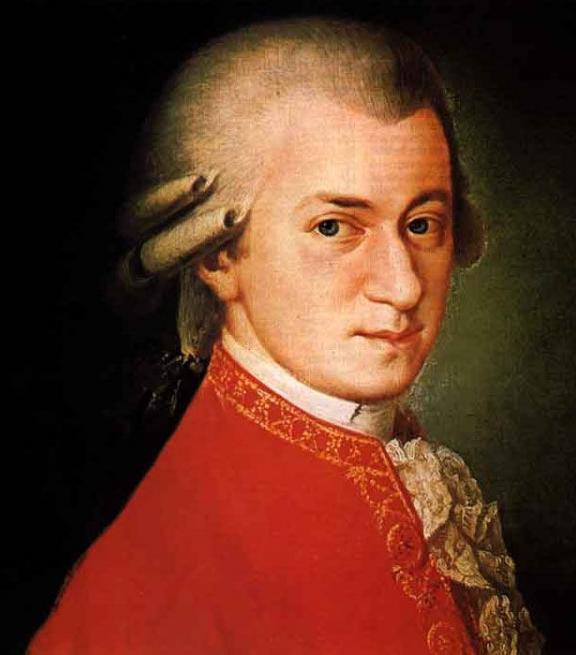 Much ink has been spent on the circumstances surrounding the composition of Mozart's Requiem. All the romantic embellishments including the poisoning of Mozart by rival Salieri and Mozart's conviction that he was writing a requiem for himself at the behest of some messenger of death have been rounded up and deliciously portrayed on stage and screen in Peter Shaffer's Amadeus, (which, not incidentally, precipitated a renewed interest in the performance of the Requiem). These scenarios, as well as the one that has Mozart rehearsing the Requiem on the last day of his life with family friends and bursting into tears during the first few bars of the Lacrymosa, are as specious as they are irresistible. Death was a far more commonplace and less romanticized occurrence in 1791 than today. Mozart and his beloved sister "Nannerl" were the only two of Leopold's seven children who survived to adulthood. Mozart and Constanze had six children, of whom only two lived longer than six months. Any manner of malaise could result in death, and the attitude of the time toward this constant possibility had to be more accepting in order to go on with daily life. As Mozart said in a letter to his ailing father in 1787, "Since death, when you come to think of it, is actually the ultimate purpose of our life, I have got to know this true, best friend of man so well that his image not only no longer frightens me, but calms and comforts me! And I thank God that He has given me the boon of providing an opportunity to get to know Him as the key to our true happiness. I never go to bed without considering that, young as I am, perhaps I shall not see the next day."
In life, Mozart's impoverishment made him only too familiar with the physical and psychological stressors of exhaustion, poor nutrition, and the exigencies of supporting his recently expanded family. With the reversal of his fortune in his last years, no work offered could he refuse. Three commissions came his way in 1791. The first was from actor friend and fellow Freemason Emanuel Schikaneder for an opera in German, The Magic Flute. Work on this had started when the summer brought another commission, this one an "intrigue opera" (La clemenza di Tito) for a celebration in Prague of the coronation of the Austrian emperor Leopold II as King of Bohemia. The third commission came by way of an emissary shortly before the coronation. He offered Mozart an unsigned letter full of flatteries and an inquiry as to whether the composer would consider writing a requiem, and for how much and how soon. With half of the requested amount placed immediately in hand and the balance to be paid on delivery, Mozart felt no need to ask questions about the source.
The mysterious intermediary was Franz Anton Leutgeb, steward of Count Franz Walsegg Stuppach. The Count had lost his wife the previous February, and the requiem was to be in her honor. A music lover, Walsegg had concerts in his home twice a week, and delighted in copying over original scores of other composers and having his guests guess their origin. "Usually we guessed the Count himself, because he did in fact occasionally compose a few trifles; he would smile at that and be pleased that he had (or so he believed) succeeded in mystifying us,” wrote one of his guests.
Mozart worked on the Requiem that summer, interrupted by the need to finish both operas. Falling ill in October at the height of The Magic Flute's popularity, he took to his bed and died of renal failure on December 5, 1791. That he foresaw his own death is given the lie by the fact that the title page of the Requiem autograph bears the date 1792 in his own hand: clearly he had planned to finish the work. In the end, he completed only the Requiem and Kyrie, and sketched the Dies Irae through the Hostias. The widowed Constanze, desperate for income, engaged one of Mozart's pupils to finish the work. Franz Xaver Süssmayer completed the orchestration and wrote the final movements (probably making use of sketches left by his teacher). The work was given to Walsegg, who gave it its first performance in 1793.
-- Hilary Hatch
Requiem, Op. 48
Gabriel Fauré (1845-1924) Fauré composed his best-known work, Requiem, in 1887, purely, as he said, for the pleasure of it. The first performance took place at the fashionable church of The Madeleine in Paris where he was choirmaster, on January 16, 1888. The work at that time consisted of five movements, the Introit and Kyrie, Sanctus, Pie Jesu, Agnus Dei, and In Paradisum. It was scored for chamber chorus and an orchestra consisting of solo violin, divided violas, divided cellos, basses, harp, timpani, and organ.
An expanded version which included the Offertory, written in 1889, and the Libera Me, composed as an independent composition as early as 1877, had its first performance in January of 1893. Bassoons, horns, and optional trumpets were added for that performance. A third and final version of the Requiem was published in 1900. This symphonic version for large choir and full orchestra was probably created at the request of the publisher, Julien Hamelle, who felt the piece would be more popular with large forces.
Of all the requiems, from Mozart’s to Britten’s, Fauré’s stands out for its serenity and soothing gentleness. As a choirmaster and organist, Fauré constantly sought to create a new kind of church music. He wanted something other than the operatic bel canto style which was popular in Paris at the time, and apart from the outsized, large-scale Germanic Romantic style which dominated the rest of Europe. The most dramatic moment in the piece is the Dies Irae, Dies Illa (“that day, day of wrath”). Remember the setting by Berlioz with its four brass bands or Verdi with two sets of off-stage trumpets? Fauré limits himself to sixteen bars and just two horns to announce “that day,” not as a separate movement but only as it appears in the Libera Me. Drawing inspiration from the tunes and rhythms of Gregorian chant, he uses subtle gradations in dynamic, color, and harmony to achieve the effects he wants.
In an interview in 1902, Fauré commented: “It has been said that my Requiem does not express the fear of death, and someone has called it a lullaby of death. But it is thus that I see death: a happy deliverance, an aspiration towards happiness above, rather than as a painful experience. The music of Gounod has been criticized for its overinclination towards human tenderness. But his nature predisposed him to feel this way. Is it not necessary to accept the artist’s nature? As to my Requiem, perhaps I have also instinctively sought to escape from what is thought right and proper, after all the years of accompanying burial services on the organ! I know it all by heart. I wanted to write something different.”
I. INTROIT AND KYRIE
Eternal rest grant them, O Lord, and let perpetual light shine upon them. A hymn, O God, becometh Thee in Sion, and a vow shall be paid to Thee in Jerusalem. O Lord, hear my prayer, all flesh shall come to Thee. Lord, have mercy. Christ, have mercy.
II. OFFERTORY
O Lord Jesus Christ, King of Glory, deliver the souls of the departed from the pains of Hell and from the deep pit; save them from the mouth of the lion, nor allow the dark lake to swallow them up, nor darkness to enshroud them. With our prayers, O Lord, we offer a sacrifice of praise; do Thou receive it on behalf of those souls whom we this day commemorate. Grant, O Lord, that they may pass from death to life, which Thou didst promise to Abraham and to his seed. Amen.
III. SANCTUS
Holy, Holy, Holy, Lord God of hosts. Heaven and earth are full of Thy glory. Glory be to Thee, O Lord, Hosanna in the highest.
IV. PIE JESU
Blessed Jesus, O Lord, grant them rest; grant them eternal rest.
V. AGNUS DEI
Lamb of God, who takest away the sins of the world, give them rest. Let perpetual light shine upon them together with Thy saints for Thou art good. Eternal rest grant unto them, O Lord, and let perpetual light shine upon them.
VI. LIBERA ME
Deliver me, O Lord, from eternal death in that awful day when heaven and earth shall be moved, when Thou shalt come to judge the world by fire. Trembling, I stand before Thee, and I fear the trial that shall be at hand and the wrath to come. That day, a day of wrath, of calamity and misery, a great day and exceeding bitter. Eternal rest grant them, O Lord, and let perpetual light shine upon them. Deliver me, O Lord.
VII. IN PARADISUM
May the angels receive thee in paradise; at thy coming may the martyrs receive thee, and bring thee into the Holy City Jerusalem. There may the choir of angels receive thee and with Lazarus, once a beggar, may thou have eternal rest.
Jonita Lattimore, soprano
Jonita Lattimore, a lyric soprano of immense vocal range and expressive musicality, has garnered plaudits for her vivid portrayals of roles ranging from Micaela to Jackie O as well as oratorio performances with major orchestras across the United States and abroad. John von Rhein from the Chicago Tribune calls Lattimore’s soprano a “richly upholstered voice with secure line and coloratura.” She “is surely destined for great things.” Her performance in Barber’s Knoxville: Summer of 1915 with Concertante di Chicago was praised by the same paper for her “dusky low notes and effortless clarion upper range.” Her latest CD, Only Heaven, a collaboration of five singers, (PS Classics) was called “the most distinctive music heard all season” (USA Today), producing “spine chills and teary eyes” (Ft. Worth Star-Telegram).
Lattimore made her Lyric Opera of Chicago debut in Kurt Weill’s The Rise and Fall of the City of Mahagonny, and was also seen on Lyric’s stage as Micaela in Bizet’s Carmen. She recently performed the role of Countess Almaviva in Le Nozze di Figaro with Tulsa Opera, and debuted in the title role in the world premiere and recording of James Niblock’s Ruth at Blue Lake Fine Arts Festival. With Houston Grand Opera she appeared as Marguerite in Faust, First Lady in Die Zauberflöte, and presented the world premieres of Harvey Milk, The Book of the Tibetan Dead, and Jackie O, which was recorded on Decca. She made her Paris debut at the Bastille Opera as Serena in Porgy and Bess.
2011/12 offers returns to the Orequesta Sinfonica Nacional de Mexico in Beethoven’s Ninth Symphony, and the Mozart Requiem with both Vermont Symphony and Louisiana Philharmonic. Among the 2010/11 highlights figured Haydn’s Paukenmesse with the Sinfonica Nacional de Mexico and concerts with the Charlotte Symphony. The 2009/10 season included a debut with Orquesta Sinfonica Nacional de Mexico and returns to the Houston Symphony, Huntsville Symphony, Grant Park Music Festival and Chicago Sinfonietta. During the 2008-09 season, Lattimore sang Serena in the Lyric Opera of Chicago’s production of Porgy and Bess, the Fauré Requiem with Eugene Symphony and Verdi’s Requiem with the Virginia and Colorado symphonies. During the summer, she returned once again to the Grant Park Music Festival, this time in Torke’s Plans.
An artist profile of Jonita Lattimore was aired on Artbeat Chicago, an arts television program on WTTW-Chicago’s Public Broadcast System entitled Home Grown Diva; and she is featured on WTTW’s Opera Philes, a program of favorite opera arias and ensembles. She is the soprano soloist in Robert Avalon’s Sextet de Julia de Burgos, recorded on Centaur.
Susan Platts, alto
British-born Canadian mezzo-soprano Susan Platts brings a uniquely rich and wide-ranging voice to concert and recital repertoire for alto and mezzo-soprano. She is particularly esteemed for her interpretations of the Mahler symphonies and song cycles.
In May of 2004, as part of the Rolex Mentor and Protégé Arts Initiative, world-renowned soprano Jessye Norman chose Ms Platts as her protégée from 26 international candidates, and has continued to mentor her ever since. With the generous support of Rolex, Ms. Platts recently commissioned a work for mezzo-soprano and orchestra from celebrated Canadian composer Marjan Mozetich: Under the Watchful Sky, comprised of three songs using ancient Chinese texts from Shi Jing (“The Book of Songs”) that explore the universal passions and tribulations of humankind, was premiered by the Québec Symphony under Yoav Talmi in November 2010.
Ms. Platts has performed at Teatro alla Scala, Teatro di San Carlo, Carnegie Hall and Lincoln Center as well as with the Philadelphia, CBC Radio, Cleveland and Minnesota Orchestras, Orchestre de Paris, National Arts Centre Orchestra, Montreal, Toronto, American, Detroit, Milwaukee and Houston Symphonies, Les Violons du Roy, Los Angeles and St. Paul Chamber Orchestras. She has collaborated with many conductors including Yannick Nézet-Séguin, Roberto Abbado, Leon Botstein, Sir Andrew Davis, Andreas Delfs, Christoph Eschenbach, Jane Glover, Eliahu Inbal, Jeffrey Kahane, Bernard Labadie, Kent Nagano, Peter Oundjian, Itzhak Perlman, Bramwell Tovey, Osmo Vänska and Pinchas Zuckerman. Ms Platts has appeared on many distinguished art-song series including twice for both the Vocal Arts Society at the Kennedy Center in Washington, D.C. and Ladies Morning Musical Club in Montreal, and both the Frick Collection on Lincoln Center “Art of the Song” series in New York City.
Ms. Platts has recorded Mahler’s Das Lied von der Erde for Fontec Records with Gary Bertini conducting the Tokyo Metropolitan Orchestra, a CD of dramatic sacred art songs with pianist Dalton Baldwin, Gustav Mahler's Lieder eines fahrenden Gesellen with the Smithsonian Chamber Players and Santa Fe Pro Musica for Dorian Records and Brahms Zwei Gesänge with Steven Dann and Lambert Orkis on the ATMA label. Her first solo disc of songs by Robert Schumann, Clara Schumann and Johannes Brahms on the ATMA label enjoyed considerable critical acclaim.
Richard Clement, tenor
Grammy-winning American tenor Richard Clement has performed with most of America’s major orchestras and music directors, bringing tonal beauty and superb musicality to repertoire from the baroque to the contemporary. He recently earned particular acclaim for the title role of Elgar's The Dream of Gerontius with the North Carolina Symphony and Sacramento Choral Arts Society and Orchestra. In addition he premiered--and recorded--Theofanides' The Here and Now with Robert Spano and the Atlanta Symphony, including performances in Atlanta and at New York’s Carnegie Hall (he has also sung Messiah and concert performances of John Adams’ Doctor Atomic with them). Among the most in-demand tenors for Beethoven’s Ninth Symphony, invitations include the Brooklyn Philharmonic, Saint Paul Chamber Orchestra; New Jersey, Milwaukee, San Antonio, Oregon, Memphis, San Diego, Baltimore, Nashville, Phoenix, Colorado and Toledo Symphonies. He sang Elijah with the Memphis and Charlotte Symphonies; the Verdi Requiem with the Santa Rosa and New Jersey Symphonies and Chautauqua Music Festival Orchestra; Beethoven's Missa solemnis with the New Mexico Symphony Orchestra and National Arts Centre Orchestra; and Haydn’s Die Schöpfung with the Colorado and Puerto Rico Symphonies. In addition Mr. Clement has performed Belmonte in Mozart’s Die Entführung aus dem Serail with Leonard Slatkin and the National Symphony; Rachmaninoff’s The Bells with Jeffrey Kahane and the Colorado Symphony; Orff’s Carmina Burana with Neeme Järvi and the Detroit Symphony, and two Mozart programs with Boston’s Händel & Haydn Society under Grant Llewellyn. He also sang Mendelssohn’s Die erste Walpurgisnacht and Second Symphony with Kurt Masur and the Israel Philharmonic; Toch’s Cantata of the Bitter Herbs with the Czech Philharmonic; the Mozart Requiem with the Saint Louis and Delaware Symphonies; Stravinsky’s Oedipus Rex with Charles Dutoit and the Montreal Symphony; Kernis’ Millenium Symphony with the Minnesota Orchestra; Tippett’s A Child of Our Time with Jeffrey Kahane and the Santa Rosa Symphony; The Bells with Leon Botstein and the American Symphony in Lincoln Center’s Avery Fisher Hall; Haydn’s Seven Last Words of Christ and Beethoven’s Missa solemnis with the Saint Paul Chamber Orchestra. He has been guest soloist with the Cleveland and Philadelphia Orchestras; Houston, Toronto, San Francisco and Cincinnati Symphonies, and collaborated with such conductors as Wolfgang Sawallisch, Jesús López-Cobos, Bobby McFerrin, Daniel Harding, Christopher Hogwood, Carlo Rizzi, John Mauceri, Marin Alsop, Hugh Wolff and James Conlon.
Festival engagements include Tanglewood (concert performance of Act III of Verdi’s Falstaff), Beethoven #9 at both Grant Park and the Hollywood Bowl, and the Bach B Minor Mass with Seiji Ozawa at Japan’s Saito Kinen Festival.
Mr. Clement’s considerable operatic credentials include Pedrillo in Mozart’s Die Entführung aus dem Serail with Sir Colin Davis and the New York Philharmonic; Tamino in Mozart’s Die Zauberflöte at Belgium’s De Vlaamse Opera and with the Colorado Symphony. At the Vancouver Opera his roles include Nanki-Poo (The Mikado), Ferrando (Così fan tutte), Little Bat (Susannah) and Don Ottavio (Don Giovanni); Ernesto (Don Pasquale) at Glimmerglass Opera; Vanya (Katya Kabanova) and To-No-Chujo (Tale of the Genji) at Opera Theater of St. Louis; Belmonte (Entführung) with the Boston Baroque; Lensky (Eugen Onegin) and Nemorino (L’elisir d’amore) at Opera Festival of New Jersey; Candide, Lockwood (Wuthering Heights) and Fenton (Falstaff) at Boston Lyric Opera; and Albert Herring with the Atlanta Opera.
Mr. Clement studied voice at Georgia State University and the Cincinnati Conservatory, where he received his Master of Music degree. He was a Tanglewood Music Festival Fellow, has been a member of the Houston Grand Opera Studio and was a recipient of the Richard Tucker Music Foundation Jacobson Study Grant. Recordings include Britten’s War Requiem with the Washington Choral Society, Bartók’s Cantata Profana with the Atlanta Symphony (both Grammy winners) and Tchaikovsky’s Pique Dame. Mr. Clement is currently on staff as a visiting lecturer at Atlanta's Georgia State University.
Kevin Deas, bass
Kevin Deas has gained international acclaim as one of America’s leading basses. Lauded for his “burnished sound, clarity of diction and sincerity of expression” and “fervent intensity” by Chicago Tribune critic John von Rhein, Deas has been variously called “exemplary” (Denver Post), “especially fine” (Washington Post) and possessing “a resourceful range of expression” (The Cincinnati Enquirer). He is perhaps most acclaimed for his signature portrayal of the title role in Porgy and Bess, having sung it with the New York Philharmonic, Philadelphia Orchestra, National Symphony, the St. Paul Chamber Orchestra, San Francisco, Atlanta, San Diego, Utah, Houston, Baltimore and Montreal symphonies and the Ravinia and Saratoga festivals.
2011/12 brings repeat visits to the National Philharmonic, return engagements with Boston Baroque, Musica Sacra, Oratorio Society of New York and Princeton Pro Musica, as well as the Requiem by both Fauré and Mozart with the Vermont Symphony and a Dvorak program with the Buffalo Philharmonic and North Carolina Symphony.
Deas’ 2010/11 season highlights consisted of appearances with the Calgary Philharmonic in Porgy and Bess, Boston Baroque with Messiah, a Richmond Symphony Beethoven Symphony No. 9, St. John Passion at the Winter Park Festival, Philip Glass’ Passion of Ramakrishna with Pacific Symphony, Paukenmesse with Orquesta Sinfonica Nacional de Mexico and Beethoven’s Ninth Symphony with the National Symphony of Costa Rica on occasion of the orchestra’s 70th anniversary.
Other recent highlights include Beethoven’s Ninth Symphony under the baton of Daniel Barenboim with Filarmonica della Scala in Accra celebrating the 50th anniversary of the founding of Ghana, Copland’s Old American Songs and Mozart's Marriage of Figaro with the Chicago Symphony, Messiah with the Cleveland Orchestra, Brooklyn Philharmonic and Handel & Haydn Society, an opening performance at the Newport Jazz Festival with the Dave Brubeck Quartet, Beethoven’s Symphony No. 9 with the Colorado Symphony and Tokyo Symphony Orchestra, and performances of Brubeck’s To Hope! in Salzburg and Vienna. He also sang at Lincoln Center's Mostly Mozart Festival and Carnegie Hall, Elgar’s Dream of Gerontius with the Chicago Symphony and Barenboim, Mozart’s Requiem with the Atlanta Symphony, and How the Grinch Stole Christmas with the Houston Symphony.
A strong proponent of contemporary music, Kevin Deas was heard at Italy’s Spoleto Festival in a new production of Menotti's Amahl and the Night Visitors in honor of the composer's eighty-fifth birthday, videotaped for worldwide release. His 20-year collaboration with Dave Brubeck have taken him to Salzburg, Vienna and Moscow in To Hope! and his Gates of Justice were presented in a gala performance in New York during the 95/96 season. He also performed Tippet's Child of our Time with the Vancouver Symphony and in 1992 debuted with the Chicago Symphony in a concert version of X: The Life and Times of Malcolm X by Anthony Davis, later repeated in New York and recorded.
Kevin Deas’ list of recordings is as varied as it is impressive: He has recorded for Decca/London Die Meistersinger with the Chicago Symphony under the late Sir Georg Solti and Varèse's Ecuatorial with the ASKO Ensemble under the baton of Ricardo Chailly. Other releases include Bach's B minor Mass and Handel's Acis & Galatea on Vox Classics and Dave Brubeck's To Hope! with the Cathedral Choral Society on the Telarc label.
Keep reading!
Friday, January 13, 2012
Farmers' Night: a FREE concert on January 25
 World-renowned conductor Andrew Massey leads the VSO in a Farmers' Night program that includes music of Gluck, Fauré, Bach, and Wagner. VSO English horn Ann Greenawalt and principal trumpet Mark Emery are featured in Copland’s popular Quiet City, and there is a part for the audience in Purcell’s clever “Fantasia upon One Note.” This delightful concert is part of the Vermont State House Farmers' Night series. These free concerts are presented in the Legislative Chambers. Doors open at 6:30 p.m. and the seats are offered on a first-come, first-served basis, so arrive early. Keep reading for the program and some biographical notes.
David M. Wilson Memorial Farmers' Night Concert
Wednesday, January 25
Doors at 6:30 p.m.
Concert at 7:30 p.m.
Free and open to the public
Andrew Massey, conductor
Ann Greenawalt, English horn
Mark Emery, trumpet
GLUCK Overture to Orpheus
FAURE Nocturne from Shylock, Op. 57
COPLAND Quiet City
J.S. BACH Air on the G String
PURCELL Fantasia upon One Note
WAGNER Siegfried Idyll
Andrew Massey lives in Montgomery Center, VT, although his musical activities take him far and wide. Last summer he was conducting the Indonesian National Symphony Orchestra in Jakarta, also visiting Bali and Singapore. He recently conducted the City Chamber Orchestra of Hong Kong on the first tour by a Chinese Orchestra to Italy, and last year directed a concert of new Icelandic music in Reykjavik; a concert at which every composer featured was both alive and present.
Andrew grew up in England, studying at Oxford University, composing and conducting, until he moved to the USA in 1978 to become Assistant Conductor of The Cleveland Orchestra under Lorin Maazel. Since then he has been Associate Conductor of the San Francisco Symphony and New Orleans Symphony, Resident Conductor of the Milwaukee Symphony, and Music Director of the Rhode Island Philharmonic, Fresno Philharmonic, Toledo Symphony, Oregon Mozart Players, Racine Symphony, and the Michigan Chamber Orchestra. He has guest conducted widely, and appeared with soloists such as Rostropovich, Ella Fitzgerald, Viktoria Mullova, Gil Shaham, Claudio Arrau, Ivan Moravec, Ida Haendel, Hilary Hahn.
He conducted the Vermont Symphony first in 2007, and is delighted to return. In Vermont, he also leads the orchestra at Middlebury College, appears this season with the Burlington Chamber Orchestra, and directed a memorial concert on 9/11/2011 with the Green Mountain Mahler Festival, featuring Mahler’s second symphony, and his own memorial composition Early Mourning.
The violin concerto, Another Spring, composed as a companion piece for Vivaldi, was performed recently in Wisconsin, and he has several compositions in the pipeline, along with essays on the hidden message of Britten’s War Requiem, and on music by Webern, Mahler, and Beethoven.
Like so many in Vermont, he lives hidden away in the hills, listening to the wind move through the forest, hearing the Hermit thrush, delighted to be able to drive to the airport encountering no traffic lights. His wife, Sabra, heads the Mountain Fiber Folk Cooperative, and his grown children live in Florida and England.
Ann Greenawalt, oboe, holds Bachelor’s and Master’s degrees in performance from the Juilliard School. At Juilliard she was fortunate to have the opportunity to study English horn with Thomas Stacy, principal English horn with the New York Philharmonic. In 1989 she became a member of the Vermont Symphony Orchestra when she won the contracted English horn position. In addition, she teaches privately, and performs with Opera North and the Burlington Choral Society. Since moving to Vermont in 1984, she has also played with the Hanover Chamber Orchestra, the Vermont Mozart Festival, and the New England Bach Festival. Ann works part-time at Ellis Music Company, a business founded by her father-in-law, Richard Ellis. She resides in South Royalton, Vermont with her husband, trumpeter David Ellis, and has two grown children, Emily and Miles.
Mark Emery, trumpet, grew up in California and Oregon. After hearing a brass quintet perform at his school, he fell in love with the trumpet, and began learning how to read music while singing hymns in church. He earned his B.M. from Portland State University in 1998.
Mark is a graduate of New England Conservatory and the Tanglewood Music Center, where he received the "Roger Voisin Trumpet Award." In addition to playing principal trumpet with Vermont Symphony and Opera North in Lebanon, NH, Mark has performed with National Symphony Orchestra at the Kennedy Center, has toured and recorded with the Boston Pops Orchestra under Keith Lockhart, and has performed extensively with the Boston Symphony, including six Carnegie Hall performances and dozens of concerts at Tanglewood under the greatest conductors in the world. Mark can be heard on recordings by Vermont Symphony, Boston Pops, Oregon Symphony, Callithumpian New Music Consort, Huntington Brass, and Innovata Brass.
Keep reading!
Friday, October 14, 2011
Program notes: Masterworks Opening Night October 29

The 2011/2012 Masterworks season begins Saturday, October 29, with a Halloween-themed program guaranteed to send chills up your spine! In Saint-Saëns’ amusing Danse macabre, the xylophone portrays dancing skeletons, as Death plays on a violin tuned to a devilish pitch. Our frighteningly talented young piano soloist plays Rachmaninoff’s virtuosic Rhapsody on a Theme of Paganini, whose 24 variations weave an ever more diabolic spell on the listener. The Dies Irae (Day of Wrath) plainchant melody which appears in the Rhapsody also permeates Berlioz’ most famous work, Symphonie fantastique. The large forces required (8 timpani and 2 tubas, for starters) dramatize the composer’s haunting and ghoulish visions, culminating in the wild Witches’ Sabbath finale. Feel free to come in costume! Musically Speaking, our pre-concert talk, starts at 7 p.m. The concert begins at 8 p.m. Keep reading for the program notes!
Danse macabre, Op. 40
Camille Saint-Saëns (1835-1921)
The ghoulish theme of a witches’ midnight sabbath was enticing to many nineteenth century composers (in addition to Berlioz’ Symphonie fantastique, Mussorgsky’s Night on Bald Mountain is a good example), and Saint-Saëns was one of them. Though in general he was a thoroughly serious composer, there was definitely an antic entertainer in Saint-Saëns’ personality, and in 1874 he produced an amusing variant on the genre, Danse macabre.
A crazy poem by Henri Cazalis is quoted in the score: “Zig and zig and zag, Death sets the rhythm/Striking a tombstone with his heel/Death at midnight plays a dance/Zig and zig and zag, on his violin/One hears the rattling bones of the dancers/But psitt! Suddenly the dance ceases/They push each other, they flee, the cock has crowed.” The harp strikes midnight. Death tunes up his fiddle, but the E string has been lowered a half step (this is called scordiatura) resulting in a discordant interval traditionally known as “the devil in music.” Two themes--a whirling waltz melody and an eerie melody that descends by half steps—are cleverly intermingled towards the end of the piece, when we hear the cock crow in the oboe.
To represent the rattling bones of the dancing skeletons, Saint-Saëns introduced the xylophone to the symphony. It was such a novelty that he actually wrote in the score where to purchase the instrument.
Rhapsody on a Theme of Paganini, Op. 43
Sergei Rachmaninoff (1873-1943)
“When composing, I am a slave. Beginning at nine in the morning I allow myself no respite until after eleven at night.” S.R.
If ever a virtuoso was said to have been able to possess the souls of his listeners, that virtuoso was Paganini. Scarecrow thin, extremely tall, and intensely absorbed in his spell-weaving, the violinist played music that simply no others could, and was able to switch instantly from pyrotechnical display to heart-rending melodiousness. A popular superstition held that he was in league with the devil. In fact, it has been determined recently that some of Paganini’s inimitable violinistic abilities were more Mendelian than Mephistophelian. Through the inheritance of a defective chromosome, Paganini became a victim of Marfan Syndrome, a disorder of connective tissue, also called Arachnodactyly or “spider fingers.” The excessive length and hyper extensibility of his finger joints was definitely key in the violinist’s attainment of a para-normal technique.
The element of virtuosity is at the heart of Paganini’s style, and it is fair to say that the popularity of his music waned when death brought his performances to an end. If his talents and personality are captured for posterity in any one work, that work would be his Ventiquattro capricci per violini solo, Op. 1. The caprices were potent enough to provide themes for new works by Schumann, Liszt, Brahms, and, of course, Rachmaninoff.
Rachmaninoff composed his Rhapsody in midsummer of 1934 while living at his estate on Lake Lucerne in Switzerland. Having left his native Russia after the October Revolution in 1917, he was, in 1935, to relocate permanently to the United States. Certainly 1934 must have been a time of decision-making for him, and perhaps it is no coincidence that the liturgical melody Dies Irae is woven through the Rhapsody, this theme being part of the Catholic Mass for the Dead which describes the events on the Day of Judgment. The original title of the work was Rhapsodie (en forme de variations) sur un thème de Paganini; although the title was abbreviated, the work comprises an introduction, the theme, and twenty-four brief variations, of which the seventh, tenth, and twenty-fourth feature the Dies Irae melody.
The piece opens with an eight bar introduction and a first variation titled Precedente. Then the Paganini theme is stated, aptly, by the violins, with the piano executing single note exclamations on the first beat of each measure. The variations are strikingly rhythmic, and the slow Variation 18 is a lyrically beautiful inversion of the theme. The variations thereafter pick up in tempo and character, leading to the final one, which is a thundering combination of the Paganini theme and the Dies Irae melody.
--Hilary Hatch
Symphonie fantastique, Op. 14
Hector Berlioz (1803-1869)
In 1827, the 24 year-old Hector Berlioz attended a performance of Hamlet at the Odéon in Paris. Although he did not understand a word of English, the female lead, Harriet Smithson, captured his heart with her beauty and her voice. Berlioz sent the actress letter after letter but got no reply. He decided to write a great symphony to woo her with a portrayal of his love. The Symphonie fantastique, completed in 1830, is one of the most original and impassioned works in musical history. It anticipates Wagner’s leitmotif in its use of a recurring melody (which Berlioz called l’idée fixe) to represent Miss Smithson. Unusual orchestral colors and “special effects” abound—the Eb clarinet, chords in the timpani, the dialogue between English horn and oboe. In the last movement, the violins hit their strings with the wooden side of their bows in imitation of the rattling of skeletons. Chimes herald the Dies Irae (Day of Wrath)--the often-quoted plainchant melody from the Latin Mass for the Dead—in the low brass.
Miss Smithson was not present at the work’s premiere; when she finally heard it two years later, Berlioz himself played the drums, and it is said that each time their eyes met, he played with redoubled fury. The actress finally consented to marry her persistent suitor, but this marriage built on fantasy was not destined to last.
Berlioz provided notes to accompany his composition. First a general “argument,” then an explanation of each movement, as follows:
A young musician of morbid sensibility and ardent imagination poisons himself with opium in a fit of amorous despair. The narcotic dose, too weak to result in death, plunges him into a heavy sleep accompanied by the strangest visions, during which his sensations, sentiments, and recollections are translated in his sick brain into musical thoughts and images.
Part 1. Reveries, Passions. He first recalls that uneasiness of soul…those moments of causeless melancholy and joy, which he experienced before seeing her whom he loves; then the volcanic love with which she suddenly inspired him, his moments of delirious anguish, of jealous fury, his returns to loving tenderness, and his religious consolations.
Part 2. A Ball. He sees his beloved at a ball, in the midst of the tumult of a brilliant fete.
Part 3. A Scene in the Country. One summer evening in the country, he hears two shepherds playing a Ranz-des-vaches in alternate dialogue. This pastoral duet, the scene around him, the light rustling of the trees gently swayed by the breeze, some hopes he has recently conceived, all combine to restore an unwonted calm to his heart and to impart a more cheerful coloring to his thoughts; but she appears once more, his heart stops beating, he is agitated with painful presentiments; if she were to betray him!...One of the shepherds resumes his artless melody, the other no longer answers him. The sun sets…the sound of distant thunder…solitude…silence.
Part 4. March to the Gallows. He dreams that he has killed his beloved, that he is condemned to death and led to execution. The procession advances to the tones of a march which is now somber and wild, now brilliant and solemn, in which the dull sound of the tread of heavy feet follows without transition upon the most resounding outburst. At the end, the fixed idea reappears for an instant, like a last love-thought interrupted by the fatal stroke.
Part 5. Dream of the Witches’ Sabbath. He sees himself at the witches’ Sabbath, in the midst of a frightful group of ghosts, magicians, and monsters of all sorts, who have come together for his obsequies. He hears strange noises, groans, ringing laughter, shrieks to which other shrieks seem to reply. The beloved melody again reappears; but it has lost its noble and timid character; it has become an ignoble, trivial, and grotesque dance tune; it is she who comes to the witches’ Sabbath…Howlings of joy at her arrival…she takes part in the diabolic orgy…. Funeral knells burlesque parody on the Dies Irae. Witches’ dance. The Witches’ dance and the Dies Irae together.
Keep reading!
